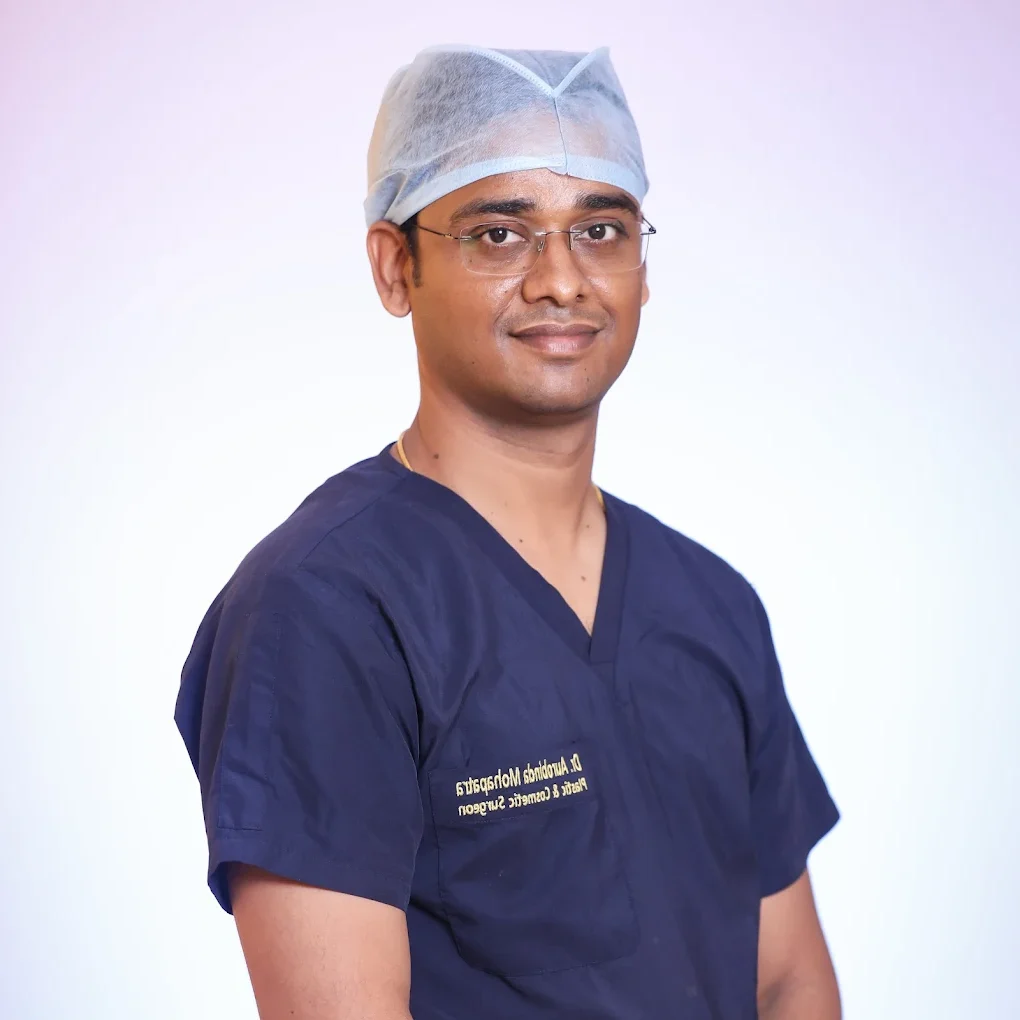



Losing hair can affect confidence at any age. Whether the cause is genetics, hormones or ageing, a hair transplant in Bhubaneswar can restore natural-looking hair using your own follicles. At REEU Aesthetic, you can discuss your hair loss pattern, your goals and the right technique with our surgeon before deciding anything.
A hair transplant is a surgical procedure in which healthy hair follicles are moved from the back or sides of the scalp (the donor area) to thinning or bald areas (the recipient area). These donor hairs are usually resistant to the hormone that causes pattern baldness, so transplanted hair generally keeps growing for a long time. This is why results are described as long-lasting, not guaranteed forever.
You may want to speak to a surgeon if you notice:
Most pattern hair loss is androgenetic alopecia, a genetic condition. Not every case of hair fall needs surgery. Early-stage thinning is often managed first with non-surgical hair loss treatment, and a transplant is considered once the pattern has stabilised.
The right technique depends on your hair type, donor supply and goals. Your surgeon will advise you after examining your scalp.
FUE | DHI | FUT | |
How it works | Follicles are taken one by one from the donor area | A type of FUE where follicles are placed using a special pen-like implanter | A thin strip of scalp is removed and split into follicular units |
Scarring | Tiny dot-like marks | Tiny dot-like marks | A thin linear scar |
Shaving needed | Usually donor area | Often donor area | Not always |
Best suited for | Most patients; short hairstyles | Patients where precise placement is a priority | Patients needing a large number of grafts in one go |
FUE hair transplant in Bhubaneswar: This is the most commonly chosen method because it avoids a linear scar and allows shorter hairstyles later.
DHI hair transplant in Bhubaneswar: DHI is not a completely different surgery. It uses the same extraction as FUE, but follicles are implanted with a pen-like tool without making recipient channels first. Some patients like the control it offers over direction and angle.
FUT: The strip method may suit some patients who need many grafts. If a scar develops, options such as scar revision treatment may be discussed later.
You may be suitable if you:
Surgeons often use the Norwood scale (stages of male pattern baldness) to plan treatment. A hair transplant may not be advised if donor hair is limited, hair loss is still progressing rapidly, or the cause of hair fall has not been identified.
Your first visit is about understanding, not selling. It usually includes:
Book Hair Transplant Consultation and bring any past reports or treatment details with you.
The procedure is usually done under local anaesthesia. Duration depends on the number of grafts.
Time | What is normal |
First few days | Mild swelling or tenderness; small crusts around the grafts |
Weeks 2–4 | Transplanted hairs may shed temporarily. This is part of the normal cycle, and the follicles stay alive under the skin |
Months 3–6 | New hair starts to appear and gradually thickens |
Months 6–12 | Density improves steadily |
Up to 12–18 months | Final results become visible for many patients; individual timelines vary |
Like any surgery, a hair transplant has risks:
A properly planned procedure and good aftercare reduce these risks, but they cannot be removed completely.
This is a hair transplant clinic in Bhubaneswar where the focus is on safe, ethical planning, not pressure to book a procedure.
The cost varies widely by city, clinic, technique and especially the number of grafts. There is no single standard price, and a very low quote can sometimes mean compromises in planning or follow-up. Ask for an itemised estimate after examination.
Transplanted follicles come from areas resistant to pattern baldness, so they usually keep growing for many years. However, your existing hair can continue to thin, so some patients need medical treatment or a later session.
Surgeons usually prefer to wait until the early to mid-20s or later, when the pattern of hair loss becomes clearer. Younger patients may be treated in selected cases, but there is no single ideal age. Stability of hair loss matters more than age.
Neither is better for everyone. Both use similar extraction, and the main difference is how follicles are implanted. Results depend largely on the surgeon’s planning and skill, graft handling and your hair type.
Common ones are swelling, redness, scabbing, itching, numbness and temporary shedding. Less common ones include infection, folliculitis, scarring and uneven growth. See the risks section above.
It depends on the extent of baldness, hair thickness and available donor hair. As a general idea, early hair loss may need roughly 1,000–2,000 grafts, moderate loss 2,000–3,500, and advanced loss 3,500 or more. Covering an entire head at full density is rarely possible in one session because donor hair is limited.
Local anaesthesia numbs the area, so most patients feel pressure rather than pain. Some soreness afterwards is managed with medicines.
New growth usually starts around 3–4 months, and the final result may take 12–18 months.
FUE leaves tiny dot-like marks that are usually hard to see with short hair. FUT leaves a thin linear scar.
Many people return to desk work within a few days, depending on technique and your surgeon’s advice. Avoid heavy exercise until cleared.
Yes, once healed, it can be washed, cut and styled like normal hair.
Some patients do, especially with advanced hair loss or ongoing thinning.