

Rhinoplasty (Nose Reshaping Surgery) in Bhubaneswar

Achieve a Balanced, Natural-Looking Nose with Expert Rhinoplasty


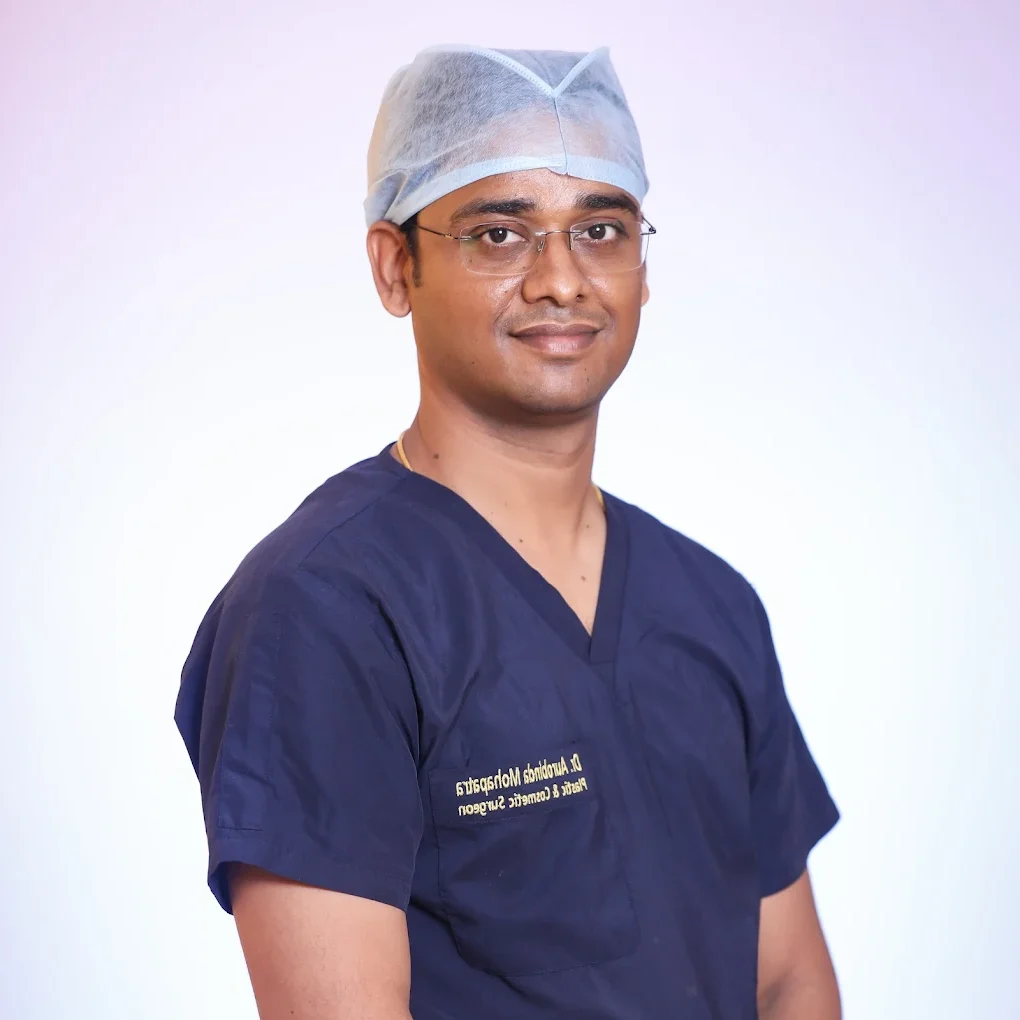
Dr. G. Aurobinda Mohapatra

M.Ch.(Plastic and Reconstructive Surgery)

Get In Touch With Us

Call Us

+91 94383 89007

Your nose plays a central role in facial harmony. If you are unhappy with its shape, size, or profile—or if breathing problems affect your quality of life—Rhinoplasty can help improve both appearance and function. Whether your goal is cosmetic enhancement, correction after an injury, or better nasal airflow, a personalized surgical plan can deliver natural-looking results that complement your facial features.

What is Rhinoplasty?

Rhinoplasty, commonly known as a nose job, is a cosmetic and reconstructive surgical procedure designed to reshape the nose by modifying bone, cartilage, or soft tissue. It may also be performed to correct structural issues that interfere with breathing, such as a deviated septum or nasal obstruction.

Modern rhinoplasty focuses on preserving your unique facial identity while improving symmetry, proportion, and functionality rather than creating an artificial appearance.

Why Consider Rhinoplasty?

You may be a good candidate if you want to:

  • Reduce or increase nose size
  • Smooth a dorsal hump or bump
  • Refine a bulbous or drooping nasal tip
  • Correct a crooked or asymmetrical nose
  • Narrow wide nostrils
  • Improve facial balance
  • Repair deformities caused by trauma
  • Correct congenital nasal irregularities
  • Improve breathing difficulties due to structural abnormalities

Benefits of Rhinoplasty

  • Enhanced facial harmony and profile
  • More proportionate nose shape
  • Improved self-confidence
  • Correction of nasal asymmetry
  • Better breathing and airflow when medically indicated
  • Long-lasting results
  • Customized surgical approach based on facial anatomy
  • Can address both cosmetic and functional concerns in one procedure

Types of Rhinoplasty

Cosmetic Rhinoplasty

Performed primarily to improve the appearance of the nose by refining its shape, projection, or proportions.

Functional Rhinoplasty

Addresses breathing issues caused by internal nasal structural problems while maintaining or improving aesthetics.

Septorhinoplasty

Combines cosmetic rhinoplasty with septal correction to improve nasal function and appearance simultaneously.

Revision Rhinoplasty

Performed to correct or improve the outcome of a previous nose surgery.

Ethnic Rhinoplasty

Tailored to enhance nasal appearance while preserving ethnic identity and unique facial characteristics.

Who is an Ideal Candidate?

You may be suitable for rhinoplasty if you:

  • Are physically healthy
  • Have completed facial growth
  • Have realistic expectations
  • Feel dissatisfied with your nose shape
  • Experience breathing difficulties related to nasal structure
  • Wish to correct injury-related deformities
  • Seek facial balance rather than perfection

A detailed consultation helps determine whether surgery is appropriate for your goals.

Conditions Rhinoplasty Can Improve

  • Nasal hump
  • Crooked nose
  • Wide nasal bridge
  • Large or bulbous tip
  • Drooping tip
  • Asymmetrical nostrils
  • Deviated septum
  • Nasal obstruction
  • Post-traumatic deformities
  • Congenital nasal abnormalities

Rhinoplasty Consultation

Your consultation typically includes:

  • Medical history review
  • Facial and nasal examination
  • Assessment of breathing function
  • Discussion of aesthetic goals
  • Surgical planning
  • Review of expected outcomes and recovery
  • Explanation of risks and benefits

Individualized planning is essential because every face and nose has unique proportions.

Rhinoplasty Procedure

Step 1: Preoperative Evaluation

Photographs and facial analysis help create a customized surgical plan.

Step 2: Anesthesia

The procedure is generally performed under general anesthesia or, in selected cases, local anesthesia with sedation.

Step 3: Surgical Approach

The surgeon may use:

  • Closed Rhinoplasty: Incisions placed inside the nostrils with no external scar.
  • Open Rhinoplasty: A small incision on the columella allows greater access for complex reshaping.

Step 4: Reshaping

Bone and cartilage may be reduced, repositioned, or augmented depending on treatment goals.

Step 5: Closure

Incisions are closed, and a nasal splint is typically applied to protect the new structure during healing.

Recovery After Rhinoplasty

First Week

  • Mild swelling and bruising
  • Nasal splint remains in place
  • Limited physical activity

Weeks 2–4

  • Most bruising subsides
  • Return to office work for many patients
  • Swelling gradually improves

1–3 Months

  • Nose continues refining
  • Most routine activities resume

6–12 Months

  • Final shape becomes increasingly apparent as healing progresses

Healing timelines vary between individuals.

Postoperative Care Tips

  • Sleep with your head elevated
  • Avoid strenuous exercise initially
  • Do not wear heavy glasses if advised
  • Protect your nose from accidental injury
  • Attend scheduled follow-up appointments
  • Follow medication and wound-care instructions carefully
  • Avoid smoking during recovery

Potential Risks

As with any surgical procedure, rhinoplasty carries potential risks, including:

  • Bleeding
  • Infection
  • Temporary swelling
  • Bruising
  • Breathing changes
  • Scar formation
  • Asymmetry
  • Need for revision surgery
  • Anesthesia-related complications

Choosing an experienced surgical team and following postoperative instructions helps reduce these risks.

Expected Results

Patients often notice:

  • Better facial proportions
  • A smoother nasal profile
  • Improved nasal contour
  • Enhanced confidence
  • Functional breathing improvement when structural issues are corrected

Final results evolve gradually as swelling resolves over several months.

Rhinoplasty Cost in Bhubaneswar

The cost of rhinoplasty varies depending on:

  • Complexity of the procedure
  • Cosmetic versus functional correction
  • Primary or revision surgery
  • Hospital and anesthesia fees
  • Surgeon’s expertise
  • Additional procedures performed simultaneously

A consultation is necessary for an individualized treatment plan and cost estimate.

Why Choose Rhinoplasty in Bhubaneswar?

Patients from Bhubaneswar and across Odisha increasingly seek advanced facial plastic surgery locally due to:

  • Access to modern surgical facilities
  • Personalized treatment planning
  • Comprehensive preoperative assessment
  • Focus on natural-looking outcomes
  • Ongoing postoperative follow-up
  • Convenient care close to home

FAQs

Is rhinoplasty permanent?

Yes. The structural changes made during surgery are generally permanent, although the nose continues to heal and settle over many months.


Will rhinoplasty improve breathing?

If performed to address structural issues such as a deviated septum or airway obstruction, rhinoplasty can improve nasal breathing.


Will there be visible scars?

Closed rhinoplasty leaves incisions inside the nostrils. Open rhinoplasty involves a small external incision that typically heals well and becomes minimally noticeable.


How long does surgery take?

Most procedures take approximately 2–4 hours, depending on complexity.


Is rhinoplasty painful?

Patients usually experience discomfort, congestion, and swelling rather than significant pain, which is managed with prescribed medications.


When can I return to work?

Many people return to desk-based work within 1–2 weeks, depending on healing and the nature of their job.


How long does swelling last?

Major swelling improves within weeks, but subtle swelling may persist for several months. Final refinement can take up to a year.


Can rhinoplasty fix a broken nose?

Yes. It can often correct deformities resulting from previous nasal injuries while improving both function and appearance.


Can teenagers undergo rhinoplasty?

In selected cases, surgery may be considered after facial growth is sufficiently complete and following specialist evaluation.


Is revision rhinoplasty more difficult?

Revision procedures are generally more complex because of scar tissue and altered anatomy, requiring careful planning and surgical expertise.