


Hair loss is one of the most common concerns affecting both men and women. Whether it begins as a receding hairline, thinning around the crown, or increased hair shedding, it can influence appearance, confidence, and self-esteem. Fortunately, several modern hair restoration treatments are available, each designed to address different stages and causes of hair loss.
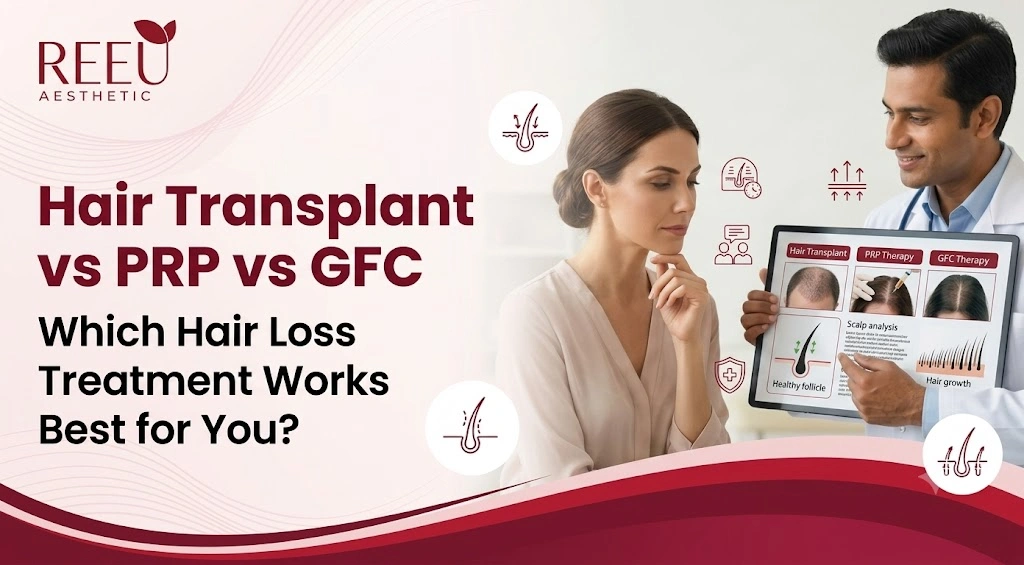
If you are comparing Hair Transplant vs PRP vs GFC, you are not alone. These are among the most searched hair restoration options because each offers unique advantages depending on the pattern and severity of hair loss. While a hair transplant focuses on restoring hair in areas with significant baldness, PRP (Platelet-Rich Plasma) and GFC (Growth Factor Concentrate) are non-surgical treatments that aim to strengthen existing hair and promote healthier growth.
This guide explains how these treatments work, their benefits and limitations, who may benefit from each option, and what to expect during the treatment journey. Whether you are in Bhubaneswar, Patia, Chandrasekharpur, Kanan Vihar, KIIT, Infocity, or nearby areas, understanding these differences can help you have a more informed discussion during your consultation.
Understanding Hair Loss
Hair loss, medically known as alopecia, can occur for many reasons. While losing around 50–100 hairs each day is considered part of the normal hair growth cycle, excessive shedding or gradual thinning may indicate an underlying condition.
Hair grows in repeating cycles consisting of:
- Anagen (Growth Phase): Active hair growth lasting several years.
- Catagen (Transition Phase): A short period when growth slows.
- Telogen (Resting Phase): Hair naturally sheds before a new hair begins to grow.
When this cycle is disrupted, hair thinning or baldness may develop.
Early evaluation can help identify the cause of hair loss and determine whether medical treatment, hair restoration procedures, or a combination approach is appropriate.
Common Causes of Hair Loss
Understanding why hair loss occurs is essential because treatment selection depends on the underlying cause rather than appearance alone.
1. Androgenetic Alopecia (Male and Female Pattern Hair Loss)
The most common cause of long-term hair loss is hereditary pattern baldness.
In men, it often appears as:
- Receding hairline
- Thinning at the crown
- Progressive baldness
In women, it typically presents as:
- Diffuse thinning over the top of the scalp
- Widening of the hair part
- Reduced hair density while preserving the frontal hairline
Both Hair Transplant and regenerative treatments such as PRP or GFC may be considered depending on the stage of hair loss.
2. Hormonal Changes
Hormonal fluctuations can influence hair growth.
Common examples include:
- Pregnancy
- Childbirth
- Menopause
- Thyroid disorders
- Polycystic Ovary Syndrome (PCOS)
Managing the underlying hormonal condition is often an important part of treatment.
3. Nutritional Deficiencies
Hair growth requires adequate nutrition.
Deficiencies in nutrients such as iron, vitamin D, vitamin B12, zinc, or protein may contribute to excessive hair shedding.
Blood tests may be recommended when nutritional deficiencies are suspected.
4. Stress-Related Hair Loss
Physical illness, surgery, emotional stress, or major life events may trigger increased hair shedding, a condition known as telogen effluvium.
This type of hair loss is often temporary, although recovery may take several months.
5. Autoimmune Conditions
Conditions such as alopecia areata can cause patchy hair loss when the immune system mistakenly attacks hair follicles.
Treatment depends on the severity and underlying diagnosis.
6. Medical Conditions and Medications
Hair loss may also be associated with:
- Chronic illness
- Certain medications
- Chemotherapy
- Scalp infections
- Inflammatory skin conditions
A detailed medical history helps identify contributing factors before recommending treatment.
Why Choosing the Right Hair Restoration Treatment Matters
Many people assume that every type of hair loss requires a hair transplant. In reality, this is not always the case.
Some individuals may benefit more from:
- PRP therapy
- GFC therapy
- Medications
- Lifestyle modifications
- Combination treatments
The most appropriate treatment depends on factors such as:
- Type of hair loss
- Stage of hair thinning
- Availability of donor hair
- Age
- Medical history
- Scalp condition
- Personal goals
An individualized treatment plan generally provides better long-term outcomes than selecting a procedure based solely on online comparisons.
What Is Hair Transplant Surgery?
A hair transplant is a surgical procedure in which healthy hair follicles are relocated from an area with good hair density (the donor area) to areas affected by thinning or baldness.
The transplanted follicles continue to grow in their new location because they retain the characteristics of the donor area.
Modern techniques are designed to achieve natural-looking hairlines and improved density when performed in suitable candidates.
Common Hair Transplant Techniques
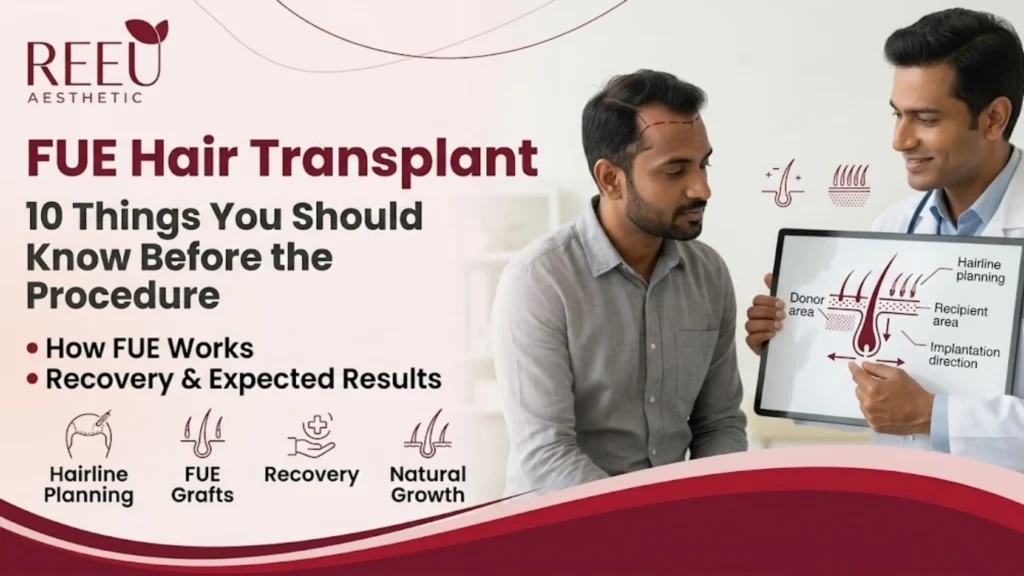
Follicular Unit Extraction (FUE)
FUE is one of the most commonly performed hair transplant techniques today.
Individual hair follicles are removed from the donor area using specialized instruments and implanted into thinning or bald areas.
Potential Advantages
- Tiny extraction sites
- No long linear scar
- Faster recovery compared with some traditional techniques
- Suitable for many patients with pattern baldness
Follicular Unit Transplantation (FUT)
FUT involves removing a strip of scalp from the donor area.
Hair follicles are separated under magnification before transplantation.
Although less commonly chosen today, FUT may still be appropriate in selected cases depending on donor hair availability and treatment goals.
Who May Benefit from a Hair Transplant?
Hair transplantation may be considered for individuals who:
- Have stable pattern baldness
- Possess adequate donor hair
- Have realistic expectations
- Are in good general health
- Have areas where hair follicles are no longer active
Hair transplantation is generally less effective for certain causes of temporary hair loss or widespread diffuse thinning.
Potential Benefits of Hair Transplant Surgery
When appropriate, hair transplantation may offer:
- Natural-looking hair growth
- Long-lasting improvement
- Permanent relocation of healthy follicles
- Improved hairline definition
- Better scalp coverage
- Enhanced appearance for many individuals
Results vary depending on donor hair quality, surgical technique, and individual healing.
Limitations of Hair Transplant Surgery
Hair transplantation may not be suitable for everyone.
Some limitations include:
- Requires a surgical procedure
- Recovery period is necessary
- Donor hair availability may be limited
- Existing non-transplanted hair may continue to thin over time
- Additional treatments may be recommended to maintain surrounding hair
What Is PRP Hair Treatment?
Platelet-Rich Plasma (PRP) is a non-surgical hair restoration treatment that uses a concentrated portion of the patient’s own blood containing platelets and naturally occurring growth factors.
The aim of PRP therapy is to stimulate hair follicles, improve scalp health, and support healthier hair growth.
Because PRP uses the patient’s own blood, the risk of allergic reactions is generally low.
How Does PRP Work?
The treatment usually involves three steps:
- A small blood sample is collected.
- The blood is processed in a centrifuge to separate platelet-rich plasma.
- The concentrated plasma is injected into areas of scalp affected by hair thinning.
The growth factors released by platelets are thought to support the hair growth cycle and improve follicle function.
Who May Benefit from PRP?
PRP may be recommended for individuals who have:
- Early-stage hair thinning
- Male pattern baldness
- Female pattern hair loss
- Diffuse hair shedding
- Existing but weakened hair follicles
It is generally less suitable for completely bald areas where hair follicles are no longer present.
Potential Benefits of PRP
PRP treatment may offer:
- Non-surgical treatment
- Minimal downtime
- Use of the patient’s own blood
- Improved hair thickness in selected individuals
- Support for existing hair follicles
- Can be combined with medications or hair transplant surgery
Limitations of PRP
PRP also has limitations.
These include:
- Multiple sessions are often required.
- Maintenance treatments may be recommended.
- Results vary between individuals.
- It cannot create new hair follicles.
- It is generally not effective in long-standing completely bald areas.
What Is GFC Hair Treatment?
Growth Factor Concentrate (GFC) therapy is another non-surgical hair restoration treatment that uses growth factors derived from the patient’s own blood.
Unlike conventional PRP, GFC involves additional processing to isolate and concentrate specific growth factors before they are injected into the scalp.
The goal is to provide a more concentrated regenerative solution that may help support healthier hair follicles.
How Does GFC Work?
The treatment generally includes:
- Blood collection
- Processing using a specialized kit
- Isolation of concentrated growth factors
- Injection into targeted areas of the scalp
The procedure is performed under sterile conditions and usually allows patients to resume routine activities shortly afterward.
Who May Benefit from GFC?
GFC therapy may be considered for individuals with:
- Early hair thinning
- Mild to moderate androgenetic alopecia
- Reduced hair density
- Ongoing hair shedding
- Patients seeking a non-surgical treatment option
It may also be recommended as part of a combination treatment plan, depending on the individual’s condition and clinical assessment.
Potential Benefits of GFC
Potential advantages include:
- Non-surgical procedure
- Minimal downtime
- Concentrated growth factors
- May improve hair thickness and density in selected patients
- Can complement other hair restoration treatments
Limitations of GFC
GFC is not a permanent solution for every type of hair loss.
Its limitations include:
- Multiple sessions may be required.
- Maintenance treatments may be be advised.
- Results vary among individuals.
- It cannot restore hair in completely bald areas where follicles are absent.
- Suitability depends on the type and stage of hair loss.
Hair Transplant vs PRP vs GFC: Key Differences
Choosing between Hair Transplant, PRP (Platelet-Rich Plasma), and GFC (Growth Factor Concentrate) depends on several factors, including the cause of hair loss, its severity, the health of existing hair follicles, and your treatment goals. No single option is ideal for everyone. A thorough scalp evaluation helps determine the most appropriate treatment plan.
The table below provides a comparison of the three treatments.
| Feature | Hair Transplant | PRP Therapy | GFC Therapy |
|---|---|---|---|
| Procedure Type | Surgical | Non-surgical | Non-surgical |
| Best For | Advanced hair loss with permanent follicle loss | Early to moderate hair thinning | Early to moderate hair thinning |
| Uses Patient’s Own Blood | No | Yes | Yes |
| Creates New Hair Growth in Bald Areas | Yes, by transplanting existing follicles | No | No |
| Strengthens Existing Hair | Limited | Yes | Yes |
| Downtime | Several days | Minimal | Minimal |
| Sessions Required | Usually one procedure (additional sessions in selected cases) | Multiple sessions | Multiple sessions |
| Maintenance | May be recommended for existing hair | Maintenance sessions may be needed | Maintenance sessions may be needed |
| Results Timeline | Gradual growth over several months | Gradual improvement after multiple sessions | Gradual improvement after multiple sessions |
| Suitable for Completely Bald Areas | Yes, if donor hair is available | No | No |
The choice should be based on clinical evaluation rather than trends or online reviews alone.
Hair Transplant vs PRP vs GFC: How Does Each Treatment Work?
Hair Transplant
Hair transplantation relocates healthy hair follicles from a donor area—usually the back or sides of the scalp—to areas affected by permanent hair loss.
The transplanted follicles continue to grow in their new location because they retain their original characteristics.
Hair transplantation addresses areas where hair follicles are no longer active.
PRP Therapy
PRP uses platelet-rich plasma prepared from the patient’s own blood.
The concentrated platelets contain naturally occurring growth factors that may help support hair follicles already present in the scalp.
PRP aims to improve the quality, thickness, and health of existing hair rather than replacing missing follicles.
GFC Therapy
Growth Factor Concentrate (GFC) therapy also uses the patient’s own blood.
Unlike PRP, GFC undergoes additional processing to isolate concentrated growth factors before they are injected into the scalp.
The treatment is intended to provide targeted regenerative support for existing hair follicles.
Which Treatment Is Right for Different Stages of Hair Loss?
The stage and pattern of hair loss often influence treatment recommendations.
Early Hair Thinning
Individuals experiencing:
- Increased hair fall
- Mild reduction in hair density
- Slight widening of the hair part
- Early recession of the hairline
may benefit from:
- PRP therapy
- GFC therapy
- Medical management
- Lifestyle modifications
At this stage, hair follicles are usually still present, making regenerative treatments more appropriate.
Moderate Hair Loss
Patients with:
- Noticeable thinning
- Visible scalp
- Reduced hair density
- Progressive pattern baldness
may be candidates for:
- PRP
- GFC
- Combination therapy
- Hair transplant in selected cases
The decision depends on donor hair availability and follicle health.
Advanced Baldness
Individuals with:
- Extensive bald areas
- Long-standing hair loss
- Absent hair follicles
- Significant recession
may require:
- Hair transplantation
- Combination treatment after transplantation
- Long-term maintenance therapies
PRP or GFC alone generally cannot restore hair in areas where follicles are no longer present.
Can Hair Transplant, PRP, and GFC Be Combined?
Yes. In some situations, doctors may recommend combining treatments to address different aspects of hair loss.
Examples include:
- PRP after a hair transplant to support healing and existing hair.
- GFC therapy to improve hair density around transplanted areas.
- Medical treatment combined with PRP or GFC to help slow ongoing hair loss.
The treatment plan is individualized based on scalp examination, diagnosis, and patient goals.
Benefits of Hair Transplant
Hair transplantation may offer several advantages for suitable candidates.
Potential benefits include:
- Long-lasting restoration of hair in bald areas.
- Natural hairline design.
- Uses the patient’s own hair follicles.
- Permanent relocation of healthy follicles.
- Improved scalp coverage.
- May improve confidence and appearance for many individuals.
However, existing non-transplanted hair may continue to thin with age, so ongoing management may still be recommended.
Benefits of PRP Therapy
PRP therapy may be appropriate for patients seeking a non-surgical approach.
Potential benefits include:
- Minimally invasive procedure.
- Little to no downtime.
- Uses the patient’s own blood.
- May improve hair thickness.
- Can strengthen existing hair.
- Can complement other hair restoration treatments.
Multiple treatment sessions are commonly recommended.
Benefits of GFC Therapy
GFC therapy offers another non-surgical option for selected patients.
Potential benefits include:
- Concentrated growth factors.
- Minimally invasive treatment.
- Minimal recovery time.
- May improve hair quality and density.
- Can be combined with other hair restoration methods.
Results vary among individuals depending on the type and severity of hair loss.
Limitations of Each Treatment
Understanding limitations is just as important as understanding benefits.
| Hair Transplant | PRP | GFC |
|---|---|---|
| Requires surgery | Cannot create new follicles | Cannot create new follicles |
| Recovery period | Multiple sessions | Multiple sessions |
| Depends on donor hair availability | Results vary | Results vary |
| Existing hair may continue thinning | Maintenance often needed | Maintenance often needed |
| Not suitable for every patient | Less effective in advanced baldness | Less effective in advanced baldness |
No treatment completely stops the natural aging process or guarantees identical outcomes for every patient.
Recovery and Downtime
Recovery expectations differ between treatments.
Hair Transplant Recovery
Immediately after the procedure, mild swelling, redness, and small crusts around the transplanted follicles are common.
Typical recovery milestones include:
First Week
- Mild swelling
- Small scabs
- Gentle scalp care
- Follow postoperative instructions carefully
Two to Four Weeks
- Transplanted hairs may temporarily shed (a normal part of the growth cycle).
- Daily activities gradually resume.
Three to Six Months
- New hair begins to grow gradually.
- Hair density slowly improves.
Nine to Twelve Months
Many patients appreciate the overall improvement by this stage, although the exact timeline varies.
PRP Recovery
Recovery after PRP is generally minimal.
Patients may experience:
- Mild tenderness
- Temporary redness
- Minor swelling
Most individuals return to routine activities on the same day or the following day.
GFC Recovery
Recovery after GFC is similar to PRP.
Temporary effects may include:
- Mild scalp tenderness
- Small injection-site discomfort
- Temporary redness
Normal daily activities can usually be resumed shortly afterward.
When Can You Expect Results?
Hair restoration requires patience because hair grows gradually.
Hair Transplant
Hair growth usually occurs in stages.
Patients often notice:
- Temporary shedding during the first few weeks
- New hair growth after several months
- Progressive improvement over time
The exact timeline varies among individuals.
PRP
Visible improvements may take several sessions.
Many patients notice gradual improvements in:
- Hair thickness
- Hair quality
- Reduction in excessive hair shedding
Maintenance sessions may be recommended.
GFC
GFC also produces gradual changes rather than immediate results.
Patients may observe:
- Improved scalp health
- Reduced hair shedding
- Better hair density over time
Response varies according to individual biology and the cause of hair loss.
Factors Affecting Hair Transplant, PRP, and GFC Costs
Patients frequently ask which treatment is the most affordable.
There is no universal answer because several factors influence pricing.
Hair Transplant Cost Factors
The overall cost may depend on:
- Number of grafts required
- Surgical technique (FUE or FUT)
- Extent of hair loss
- Surgeon’s experience
- Hospital or clinic facilities
- Follow-up care
PRP Cost Factors
PRP treatment costs vary depending on:
- Number of sessions
- Equipment used
- Treatment protocol
- Additional medications if recommended
GFC Cost Factors
The cost of GFC therapy may depend on:
- Number of treatment sessions
- Specialized processing kits
- Clinical protocol
- Follow-up care
Because every patient requires an individualized treatment plan, a consultation is the most appropriate way to receive an accurate estimate.
How Do Specialists Choose the Best Hair Restoration Treatment?
Treatment selection is based on a comprehensive clinical assessment rather than a single factor.
During consultation, the doctor may evaluate:
- Type of hair loss
- Duration of hair loss
- Family history
- Age
- Scalp condition
- Donor hair availability
- Existing hair density
- Medical history
- Lifestyle factors
- Treatment goals
In some cases, a combination of treatments may provide the most appropriate approach.
Choosing a Hair Restoration Specialist in Bhubaneswar
When comparing hair restoration clinics, consider the following factors.
Qualifications
Look for specialists with appropriate training in hair restoration and cosmetic procedures.
Relevant qualifications may include:
- MBBS
- MS
- MCh Plastic Surgery
- Specialized training in hair restoration techniques
Experience
Ask about:
- Years of experience
- Number of hair restoration procedures performed
- Experience with FUE, PRP, and GFC
- Management of different hair loss conditions
Treatment Philosophy
A good consultation should focus on:
- Accurate diagnosis
- Evidence-based recommendations
- Discussion of benefits and limitations
- Individualized treatment planning
- Realistic expectations
Safety Standards
Choose a clinic that prioritizes:
- Sterile treatment facilities
- Qualified medical staff
- Appropriate infection control measures
- Structured follow-up care
Conclusion
There is no single “best” hair restoration treatment for everyone. The most suitable option depends on the type of hair loss, the condition of existing hair follicles, the extent of baldness, and individual treatment goals.
Hair transplantation may be appropriate for individuals with established bald areas where follicles are no longer active, while PRP and GFC therapies may benefit those experiencing early to moderate hair thinning by supporting existing hair follicles. In some cases, combining treatments may be recommended to address different aspects of hair loss.
If you are comparing Hair Transplant vs PRP vs GFC, a consultation with a qualified hair restoration specialist can help determine which approach aligns with your condition, expectations, and long-term hair care plan.
Medical Disclaimer
This article is provided for educational purposes only and should not be considered medical advice, diagnosis, or treatment. Hair loss can have multiple causes, and the most appropriate treatment varies between individuals. Consult a qualified healthcare professional for a personalized assessment before making treatment decisions.
Frequently Asked Questions
1. Which is better: Hair Transplant, PRP, or GFC?
There is no single treatment that is best for everyone. Hair transplantation is generally considered for permanent bald areas where hair follicles are no longer active. PRP and GFC are non-surgical treatments that may help improve the health and thickness of existing hair follicles in suitable candidates. The most appropriate option depends on the type and stage of hair loss.
2. Is PRP better than a hair transplant?
PRP and hair transplantation serve different purposes. PRP aims to support existing hair follicles and may be more suitable for early hair thinning, whereas a hair transplant is designed to restore hair in areas where follicles have been permanently lost. Your doctor may recommend one or a combination of treatments based on your scalp evaluation.
3. What is GFC hair treatment?
Growth Factor Concentrate (GFC) therapy is a non-surgical hair restoration treatment that uses growth factors isolated from the patient’s own blood. These concentrated growth factors are injected into the scalp to support existing hair follicles and promote healthier hair growth in selected individuals.
4. Can PRP and GFC regrow hair in completely bald areas?
PRP and GFC generally cannot create new hair follicles in completely bald areas where follicles are no longer present. Hair transplantation may be considered for suitable candidates with permanent hair loss and adequate donor hair.
5. Who is a good candidate for a hair transplant?
Hair transplantation may be suitable for individuals who:
- Have stable pattern baldness
- Possess sufficient donor hair
- Are in good general health
- Have realistic expectations
- Understand the recovery process
A consultation helps determine individual suitability.
6. Can PRP and GFC be combined with a hair transplant?
Yes. In some cases, PRP or GFC may be recommended before or after hair transplantation as part of an individualized treatment plan. These therapies may support existing hair and overall scalp health, depending on the patient’s condition.
7. How long does a hair transplant procedure take?
The duration depends on the number of grafts being transplanted and the surgical technique used. Your surgeon will explain the expected treatment time during your consultation.
8. How many PRP sessions are usually needed?
The number of sessions varies depending on the severity of hair loss and the treatment plan. An initial series of sessions is often recommended, followed by maintenance sessions if appropriate.
9. Is GFC treatment painful?
Most patients experience only mild discomfort during GFC treatment. Your doctor may use measures to improve comfort during the procedure. Mild tenderness at the injection sites usually resolves within a short time.
10. What is the recovery time after a hair transplant?
Recovery differs among individuals. Most patients can gradually resume routine activities within a few days, while complete healing and visible hair growth occur over several months. Your surgeon will provide personalized postoperative instructions.
11. Can women benefit from PRP or GFC treatment?
Yes. PRP and GFC may be considered for women experiencing certain types of hair thinning after appropriate medical evaluation. Treatment recommendations depend on the underlying cause of hair loss.
12. Which treatment offers permanent results?
Hair transplantation provides long-lasting results because healthy follicles are moved to thinning or bald areas. However, the natural aging process and ongoing hair loss in non-transplanted hair may continue. PRP and GFC help support existing hair but usually require maintenance sessions to sustain benefits.