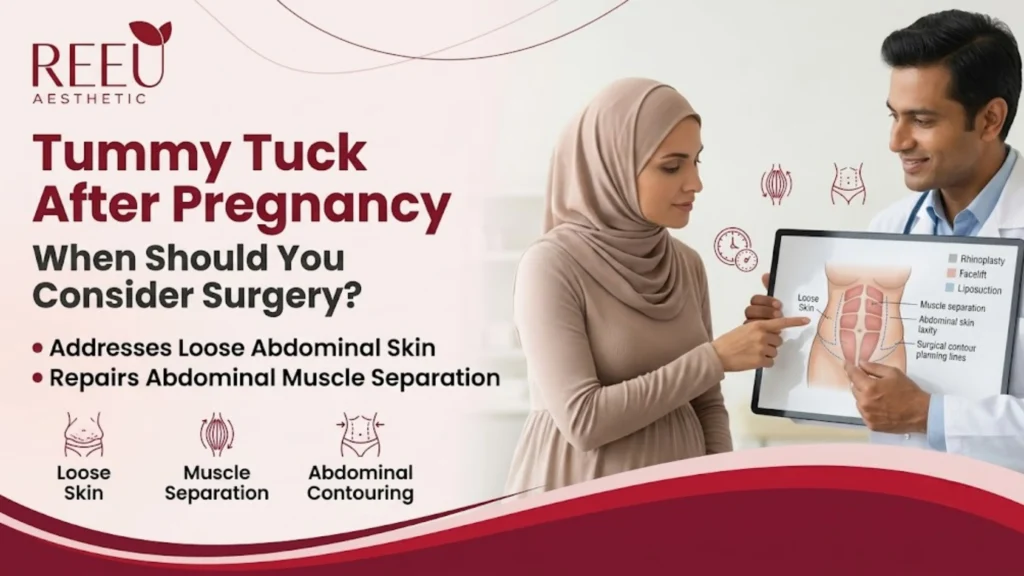



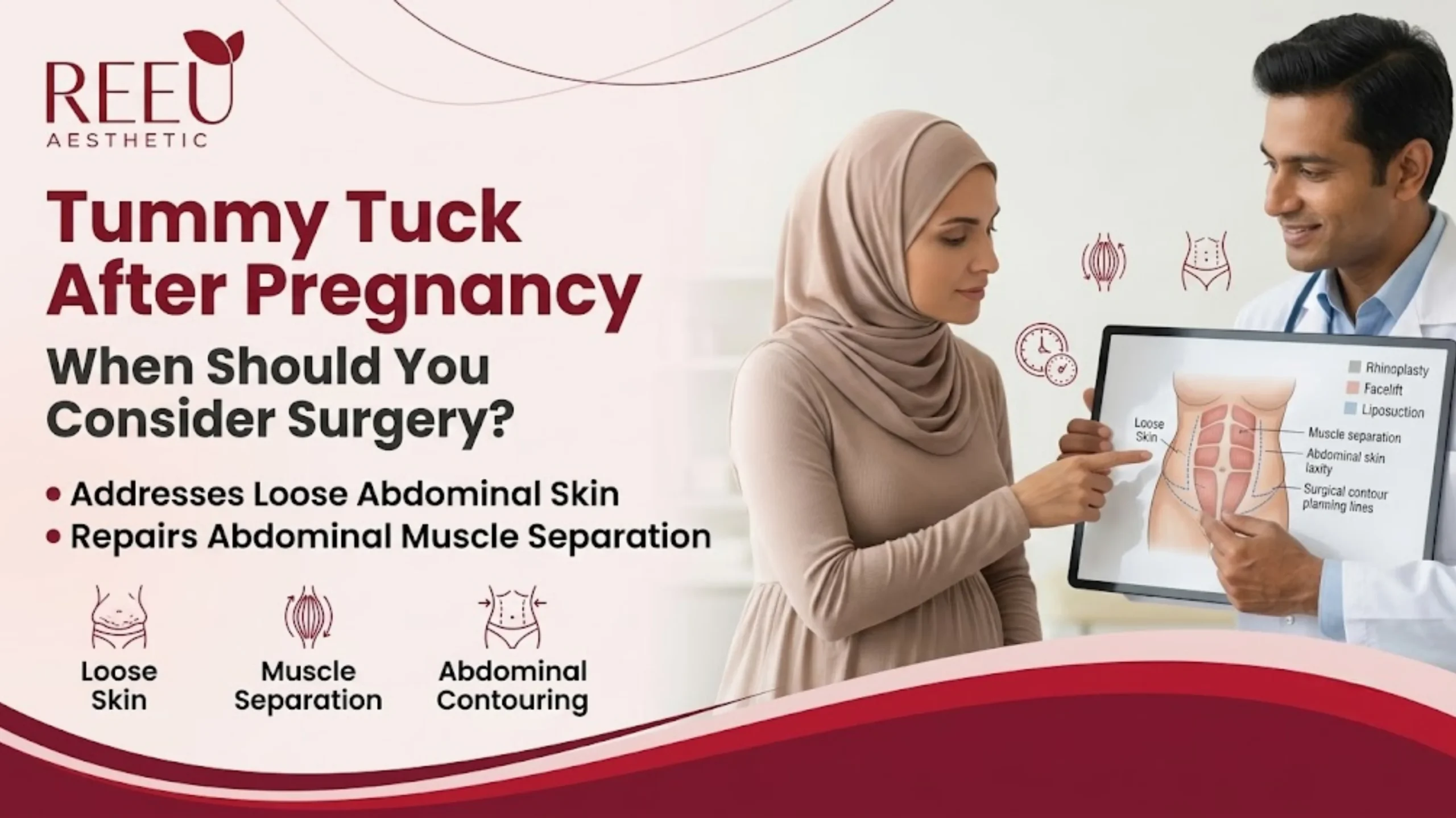
Pregnancy can permanently change the abdominal area. Even after losing pregnancy weight, some women experience loose abdominal skin after pregnancy, excess tissue, or abdominal muscle separation that does not fully improve with lifestyle changes. A tummy tuck after pregnancy, also called abdominoplasty, may be considered in selected patients after adequate postpartum recovery.
However, surgery is not automatically the right answer for every postpartum abdominal concern. Timing, overall health, weight stability, breastfeeding status, future pregnancy plans, and the specific changes affecting the abdomen all need to be considered.
How Pregnancy Can Change the Abdomen
Pregnancy stretches the skin and abdominal tissues as the abdomen expands. After childbirth, some of these tissues gradually recover, while others may remain stretched.
Common concerns include:
- Excess or loose abdominal skin
- Changes in abdominal contour
- Persistent skin laxity
- Localized excess fat
- Abdominal muscle separation, known as diastasis recti
- Stretch marks
- Changes around a previous C-section scar
These concerns are not necessarily indications for surgery. Postpartum recovery and appropriate exercise can help improve strength, fitness and overall body composition. ACOG recommends gradually returning to physical activity after childbirth when medically appropriate, with timing influenced by the type of delivery and any complications.
When Should You Consider a Tummy Tuck After Pregnancy?
There is no single waiting period that applies to every woman.
A tummy tuck is generally considered after the body has had sufficient time to recover from pregnancy and childbirth. Plastic surgery guidance commonly emphasizes waiting until postpartum changes have stabilized, weight is reasonably stable, and the patient is physically and emotionally ready. Some plastic surgeons recommend waiting at least six months, with longer intervals—sometimes around nine to twelve months—depending on recovery and breastfeeding.
A consultation may be appropriate when:
- Your postpartum recovery is complete
- Your weight has become relatively stable
- You are generally healthy enough for elective surgery
- Significant loose skin remains despite appropriate lifestyle measures
- Abdominal contour concerns persist
- You have realistic expectations about what surgery can achieve
- You have considered whether you want future pregnancies
The appropriate timing should be decided individually after examination rather than by following a fixed calendar date.
Should You Wait Until You Finish Having Children?
For many women, yes, it is preferable to complete planned pregnancies before a tummy tuck.
Another pregnancy can stretch the abdominal tissues again and may alter the result of a previous abdominoplasty. The American Society of Plastic Surgeons advises that women considering future pregnancies generally postpone tummy tuck surgery.
This does not mean pregnancy after a tummy tuck is impossible. Rather, women who are planning another pregnancy should discuss the timing carefully with their plastic surgeon.
What About a Tummy Tuck After a C-Section?
Having a C-section does not automatically prevent you from having a tummy tuck later.
The previous incision, scar tissue, abdominal skin, muscle condition and overall recovery can all be assessed during consultation.
A tummy tuck may remove some excess lower-abdominal skin, and the surgical plan can take the existing scar into account. However, a tummy tuck should not be viewed simply as a way to remove or “fix” a C-section scar.
Can a Tummy Tuck Help With Diastasis Recti?
Pregnancy can contribute to diastasis recti, a separation or widening between the abdominal muscles.
A tummy tuck can sometimes include surgical repair of separated abdominal muscles when clinically appropriate. However, not every case of abdominal separation requires surgery.
Postpartum exercise and rehabilitation may also play an important role. ACOG notes that abdominal strengthening exercises can help reduce the incidence of diastasis recti and inter-rectus distance in some postpartum women.
The cause of a persistent abdominal bulge should therefore be assessed rather than assuming that surgery is necessary.
Can a Tummy Tuck Remove Loose Skin After Pregnancy?
One of the main purposes of abdominoplasty is removing excess abdominal skin that may remain after pregnancy or substantial weight loss.
The NHS describes tummy tuck surgery as a procedure that can remove excess loose skin and fat and tighten abdominal muscles.
However, the amount of skin that can be removed depends on individual anatomy and surgical planning.
A tummy tuck also does not replace healthy weight management or exercise. The American Society of Plastic Surgeons specifically notes that abdominoplasty is not a substitute for weight loss or an appropriate exercise program.
Can Exercise Fix Loose Skin After Pregnancy?
Exercise can strengthen muscles, improve fitness and contribute to healthy weight management, but it cannot necessarily remove significant excess skin.
Postpartum exercise should be resumed gradually and according to individual recovery. After a C-section or a complicated delivery, women should discuss appropriate timing with their obstetric clinician.
If loose skin remains despite appropriate recovery and lifestyle measures, a plastic surgeon can assess whether surgery or another approach is appropriate.
Tummy Tuck vs Liposuction After Pregnancy
These procedures address different concerns.
Tummy tuck
Primarily addresses:
- Excess abdominal skin
- Abdominal skin laxity
- Selected cases of abdominal muscle separation
- Overall abdominal contour
Liposuction
Primarily removes localized deposits of fat.
Liposuction does not remove substantial loose skin or repair separated abdominal muscles.
In some patients, a combination of procedures may be considered, but the appropriate approach depends on the individual’s anatomy, health and goals.
What Happens During a Tummy Tuck Consultation?
A consultation should be more than simply discussing cosmetic goals.
A qualified plastic surgeon may evaluate:
- Abdominal skin quality
- Amount and location of excess skin
- Abdominal muscle condition
- Fat distribution
- Previous C-section or abdominal scars
- General health
- Weight stability
- Medical history
- Previous pregnancies
- Future pregnancy plans
- Expectations regarding scars and recovery
The surgeon can then explain whether abdominoplasty is appropriate and which surgical approach, if any, may be suitable.
What Is Recovery Like After a Tummy Tuck?
Tummy tuck is major surgery, so recovery requires planning and support.
Patients may experience:
- Pain or discomfort
- Swelling
- Bruising
- Temporary numbness
- Difficulty standing completely upright initially
- Restrictions on strenuous activity
The NHS notes that numbness can persist for months or longer in some patients, while swelling and scar changes can take time to settle.
For a mother with a young baby, recovery planning is particularly important. Arranging help with childcare, lifting and household activities can make the postoperative period more manageable.
Your surgeon should provide individualized instructions regarding walking, lifting, exercise, wound care and follow-up.
What Are the Risks and Limitations?
A tummy tuck is elective major surgery and has potential risks.
Possible complications include:
- Infection
- Bleeding
- Fluid collection
- Wound-healing problems
- Blood clots
- Persistent pain or numbness
- Changes in skin sensation
- Noticeable or raised scars
- Contour irregularities
- Need for additional treatment
The NHS and American Society of Plastic Surgeons both emphasize that patients should understand the risks and limitations before deciding on surgery.
Results also cannot be guaranteed. Significant future weight changes or another pregnancy may alter the abdominal contour after surgery.
Who May Be a Suitable Candidate?
A suitable candidate cannot be determined from an online article alone.
Generally, a consultation may be appropriate for someone who:
- Has recovered sufficiently from pregnancy and childbirth
- Is in generally good health
- Has relatively stable weight
- Has persistent abdominal concerns
- Understands the procedure and its limitations
- Has realistic expectations
- Has considered future pregnancy plans
Individual suitability should be determined through a medical assessment.
Choosing a Tummy Tuck Surgeon in Bhubaneswar
If you are considering a tummy tuck in Bhubaneswar, choose a qualified plastic surgeon who can assess your postpartum anatomy and discuss both benefits and limitations.
Look for:
- Appropriate plastic surgery qualifications
- Relevant experience with abdominoplasty
- Properly equipped surgical facilities
- Clear discussion of risks
- Individualized treatment planning
- Appropriate postoperative follow-up
Conclusion
A tummy tuck after pregnancy may be an option for women with persistent loose abdominal skin, changes in abdominal contour or selected cases of muscle separation after adequate postpartum recovery.
The right time depends on individual recovery, health, weight stability, breastfeeding considerations and plans for future pregnancy. Because abdominoplasty is major surgery, the decision should be made after an in-person assessment with a qualified plastic surgeon.
If you are considering tummy tuck surgery in Bhubaneswar, a consultation can help you understand whether the procedure is appropriate for your particular abdominal changes and what recovery would involve.
Medical disclaimer:
This article is for general educational purposes and does not replace an examination, diagnosis or individualized medical advice from a qualified healthcare professional.
FAQs
1. How long should I wait after childbirth before a tummy tuck?
There is no universal timeframe. Plastic surgery guidance commonly recommends waiting until postpartum recovery and body changes have stabilized. Some surgeons recommend at least six months, while others may advise waiting longer depending on breastfeeding, weight stability and individual recovery.
2. Can I have a tummy tuck after a C-section?
Yes, a previous C-section does not automatically prevent tummy tuck surgery. Your surgeon will assess the existing scar, abdominal tissues and overall recovery before recommending an approach.
3. Can a tummy tuck repair diastasis recti after pregnancy?
In selected patients, abdominoplasty may include repair of separated abdominal muscles. However, not every case of diastasis recti requires surgery, and postpartum rehabilitation may also be appropriate.
4. Should I wait until I finish having children before a tummy tuck?
If you are planning another pregnancy, discussing postponement is generally advisable because pregnancy can stretch the repaired abdominal tissues and change the surgical result.
5. Can a tummy tuck remove all pregnancy-related stretch marks?
No. A tummy tuck cannot remove all stretch marks. Some marks located on skin that is surgically removed may be removed or reduced, but stretch marks outside the excised area generally remain.
6. How long does tummy tuck recovery take?
Recovery varies according to the procedure and individual healing. Swelling, discomfort and changes in sensation can persist for some time, and strenuous activities should only be resumed according to the surgeon’s instructions.