


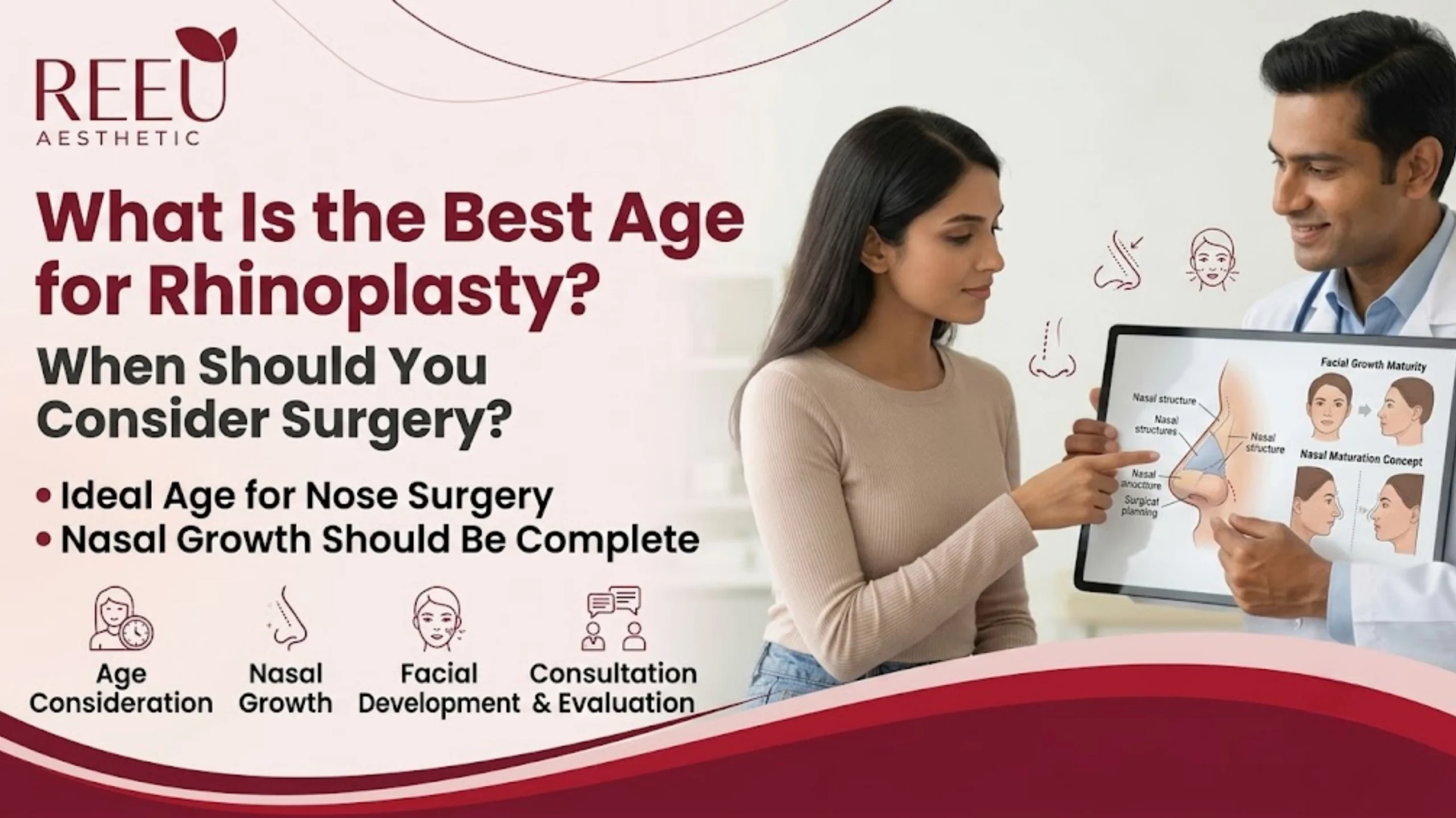
The best age for rhinoplasty is not determined by a single number. Rhinoplasty, or nose reshaping surgery, may be considered when the nose has reached an appropriate stage of physical development and the patient is healthy, emotionally prepared, and has realistic expectations about the results.
For some people, rhinoplasty is primarily cosmetic, such as changing the appearance of a nasal hump or improving facial balance. In other cases, surgery may be considered because of breathing problems, nasal deformity, or previous injury. Therefore, the appropriate timing can differ from one patient to another.
Understanding Rhinoplasty and Age
Rhinoplasty changes the structure and shape of the nose. Depending on the patient’s needs, surgery may involve modifying bone, cartilage, soft tissue, or the nasal septum.
Age matters because the nose and surrounding facial structures continue developing during adolescence. Performing elective cosmetic surgery before appropriate physical maturity requires careful individual assessment.
However, chronological age is only one part of the decision. A surgeon also considers overall health, nasal anatomy, the reason for surgery, expectations, and readiness for the recovery process.
What Is the Best Age for Rhinoplasty?
There is no universal best age for rhinoplasty.
For cosmetic rhinoplasty, surgeons generally prefer to operate after most nasal growth has been completed. This is commonly around the later teenage years, although the appropriate timing varies between individuals.
A consultation is particularly important for younger patients because the surgeon needs to assess:
- Physical development of the nose and face
- Overall health
- Nasal structure and breathing
- Reason for wanting surgery
- Emotional maturity
- Understanding of the procedure and recovery
- Expectations about the outcome
The supplied research specifically recommends avoiding rigid age-based claims and explains that physical maturity and individual assessment are more important than assigning one fixed age to every patient.
Why Physical Growth Matters Before Rhinoplasty
The nose continues to develop during adolescence. Because rhinoplasty permanently changes nasal structures, the surgeon needs to consider whether the patient’s nasal growth is sufficiently mature for the planned procedure.
This does not mean that every teenager must automatically wait until a particular birthday. Instead, physical development should be assessed individually.
A surgeon may examine the nasal bones, cartilage, facial proportions, airway, and overall development before deciding whether elective rhinoplasty is appropriate.
Rhinoplasty for Teenagers
Teenage rhinoplasty requires additional consideration compared with surgery in a fully mature adult.
Cosmetic rhinoplasty may sometimes be considered in adolescents when appropriate physical development has occurred and the patient demonstrates a clear understanding of the procedure.
The decision should not be based solely on pressure from parents, friends, social media, or changing beauty trends.
Emotional Readiness Is Important
A younger patient should understand that rhinoplasty is surgery rather than a temporary cosmetic change.
Before proceeding, the patient should be able to understand:
- What the operation can and cannot change
- The possibility of swelling during recovery
- That final results may take time to develop
- That results cannot be guaranteed to match a photograph or idealized image
- The potential risks and limitations of surgery
The research for this topic specifically identifies emotional maturity, realistic expectations, and appropriate parental involvement as important considerations when discussing rhinoplasty in younger patients.
What About Parents?
When a patient is a minor, parents or legal guardians have an important role in the decision-making process, subject to applicable laws and clinical requirements.
However, the teenager’s own understanding and willingness should also be carefully considered. Cosmetic surgery should not be undertaken simply because another person wants the patient’s appearance to change.
Rhinoplasty for Young Adults
Young adulthood is a common time for people to consider rhinoplasty because nasal growth is generally more advanced than during early adolescence.
At this stage, the surgeon still needs to assess individual anatomy and expectations rather than assuming that age alone makes someone suitable.
Someone considering rhinoplasty may have concerns such as:
- A prominent nasal hump
- A crooked or uneven nose
- A wide or narrow nasal appearance
- An asymmetrical nasal tip
- Long-standing concerns about facial balance
- Breathing difficulties associated with nasal structure
- Changes following an injury
The goal should be an appropriate improvement that fits the individual’s facial anatomy rather than creating an identical nose based on another person.
Rhinoplasty for Older Adults
There is not necessarily an upper age at which rhinoplasty becomes automatically unsuitable.
For an older adult, the surgeon may place greater emphasis on general health, medications, skin and soft-tissue characteristics, healing considerations, and the condition of the nasal structures.
A person who is otherwise medically suitable may still be considered for rhinoplasty later in life.
However, elective surgery should always involve an appropriate medical assessment. The surgeon may need to consider existing health conditions and factors that could affect anesthesia, healing, or recovery.
Cosmetic vs Functional Reasons for Rhinoplasty
The reason for surgery can influence when rhinoplasty is considered.
Cosmetic Rhinoplasty
Cosmetic rhinoplasty focuses primarily on changing the appearance of the nose.
Potential concerns may include:
- Nasal hump
- Nasal width
- Tip shape
- Nasal asymmetry
- Proportion between the nose and other facial features
The timing of elective cosmetic surgery generally requires appropriate physical development and realistic expectations.
Functional Rhinoplasty
Functional concerns can involve difficulty breathing, nasal obstruction, structural abnormalities, or changes following trauma.
In these situations, the timing may differ from purely cosmetic surgery. Younger patients with significant functional or reconstructive concerns may require assessment even when they have not reached the age typically associated with elective cosmetic rhinoplasty.
The research highlights that functional or reconstructive reasons can alter the timing of surgery and should not be treated exactly like elective cosmetic procedures.
Factors Besides Age That Affect Rhinoplasty Suitability
Age is only one part of a complete surgical assessment.
A qualified plastic surgeon may consider:
1. Physical Development
The surgeon evaluates whether the nose and facial structures have reached an appropriate stage of development.
2. General Health
Medical history, medications, allergies, previous operations, and other health factors may affect surgical suitability.
3. Reason for Surgery
The appropriate approach can differ between cosmetic concerns, breathing problems, congenital nasal differences, and post-traumatic changes.
4. Realistic Expectations
Rhinoplasty can modify nasal structure, but it cannot guarantee a specific appearance or make the nose perfectly symmetrical.
5. Emotional Readiness
Patients should understand the nature of surgery, recovery, potential risks, and realistic limitations.
6. Understanding of Recovery
Swelling and changes in nasal appearance can continue for some time after surgery. Patients need to be prepared for a gradual recovery rather than expecting an immediate final result.
These factors are consistent with the supplied research, which recommends individualized assessment rather than treating chronological age as the only eligibility criterion.
What Happens During a Rhinoplasty Consultation?
A rhinoplasty consultation is an opportunity to determine whether surgery is appropriate and whether the timing is suitable.
The surgeon may discuss:
- Your primary reason for considering rhinoplasty
- Previous nasal injuries or surgery
- Breathing concerns
- Medical history and medications
- Nasal and facial anatomy
- Physical development
- Desired changes
- Surgical options
- Recovery expectations
- Potential risks and limitations
For younger patients, the consultation may also involve discussion with parents or guardians where required.
The purpose of the consultation is not simply to decide whether surgery can be performed. It is also to determine whether the proposed procedure is appropriate for the patient’s individual circumstances.
Risks, Expectations, and Recovery
Rhinoplasty is a surgical procedure and therefore carries potential risks.
Possible complications can include bleeding, infection, changes in sensation, persistent swelling, asymmetry, breathing difficulties, dissatisfaction with appearance, or the need for additional surgery.
The exact risks depend on the procedure, individual anatomy, medical history, and other factors.
Recovery also varies. Bruising and swelling are common after surgery, while refinement of the final nasal appearance can take considerably longer.
Patients should follow the specific postoperative instructions provided by their surgical team rather than relying solely on general online recovery timelines.
Will Waiting Until 18 Always Be Necessary?
Not necessarily.
The commonly discussed age of 18 should not be treated as an absolute medical rule for every patient. The appropriate timing depends on physical maturity, the reason for surgery, health, emotional readiness, and applicable legal and clinical considerations.
For purely cosmetic surgery, waiting until appropriate nasal development is generally important. For functional or reconstructive problems, earlier evaluation may sometimes be appropriate.
The key point is that age alone should not determine suitability.
Conclusion
The best age for rhinoplasty depends on much more than reaching a particular birthday. Physical development, general health, emotional readiness, the reason for surgery, and realistic expectations all contribute to the decision.
For cosmetic concerns, appropriate nasal maturity is particularly important. Functional or reconstructive problems may require a different approach to timing.
If you are considering rhinoplasty in Bhubaneswar, a consultation with a qualified plastic surgeon can help determine whether the procedure and timing are appropriate for your individual needs. The decision should be based on a personal medical assessment rather than age alone.
Medical Disclaimer:
This article is intended for general educational purposes and does not replace an examination, diagnosis, or individualized advice from a qualified medical professional. Suitability for rhinoplasty and the appropriate timing of surgery must be determined on an individual basis.
Frequently Asked Questions
What is the best age for rhinoplasty?
There is no single best age for everyone. For cosmetic rhinoplasty, appropriate nasal and facial development, good health, emotional readiness, and realistic expectations are important.
Can teenagers have rhinoplasty?
In selected cases, rhinoplasty may be considered for teenagers after appropriate physical and psychological assessment. Functional or reconstructive concerns may also affect the timing.
Is 18 a good age for rhinoplasty?
Eighteen is not a universal medical requirement. What matters is whether the patient’s physical development, health, expectations, and readiness are appropriate for surgery.
Should you wait until your nose stops growing?
For elective cosmetic rhinoplasty, the surgeon generally considers whether nasal growth is sufficiently mature before recommending surgery. Individual assessment is more useful than relying on age alone.
Is there an upper age limit for rhinoplasty?
There is not necessarily a fixed upper age limit. Older adults can sometimes undergo rhinoplasty if they are medically suitable and understand the potential risks and recovery considerations.
Can rhinoplasty be performed for breathing problems in younger patients?
Yes, functional nasal problems may sometimes require evaluation before the age typically considered for elective cosmetic rhinoplasty. The reason for surgery and the patient’s individual anatomy are important.