


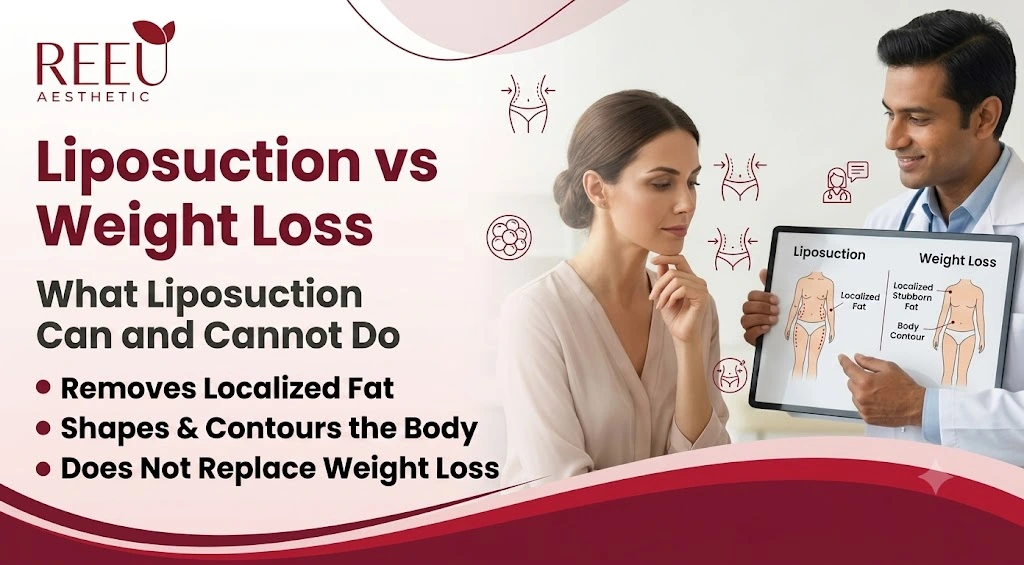
When comparing liposuction vs weight loss, it is important to understand that they are not two versions of the same treatment. Weight loss focuses on reducing overall body weight, while liposuction is primarily a body-contouring procedure designed to reduce selected areas of localized fat.
For people who have already worked on their weight through diet and physical activity but still have resistant fat deposits, liposuction may sometimes be considered. However, it is not a substitute for healthy lifestyle habits or a primary treatment for obesity.
Understanding Liposuction and Weight Loss
Weight loss usually occurs when the body uses more energy than it takes in over time. A combination of nutrition, physical activity, sleep, behavioral changes and, when medically appropriate, weight-management treatment can contribute to overall weight reduction.
Liposuction works differently. During the procedure, a plastic surgeon uses specialized techniques to remove fat from specific areas of the body.
Common treatment areas can include:
- Abdomen
- Hips and flanks
- Thighs
- Upper arms
- Back
- Chin and neck
- Other localized fat deposits
The goal is generally to improve body contours and proportions, rather than produce a major change on the weighing scale.
Liposuction vs Weight Loss: What Is the Difference?
The simplest way to understand the difference is to look at the intended outcome.
| Weight Loss | Liposuction |
|---|---|
| Reduces overall body weight | Targets selected fat deposits |
| Usually involves lifestyle and/or medical approaches | Surgical body-contouring procedure |
| Can reduce body fat throughout the body | Focuses on specific areas |
| Important for managing overweight or obesity | Not a primary obesity treatment |
| Requires ongoing healthy habits | Results depend partly on maintaining a stable weight |
Therefore, asking “Is liposuction a weight loss treatment?” can lead to confusion. Liposuction can remove some fat from a targeted area, but it should not be viewed as an alternative to medically appropriate weight management.
What Liposuction Can Do
Liposuction may be useful when the main concern is localized fat that remains despite reasonable efforts to maintain a healthy weight.
Depending on the individual assessment, it may help:
Reduce Localized Fat
Some people have fat deposits that are resistant to changes in diet and exercise. Liposuction can directly remove fat from selected areas.
Improve Body Contours
The procedure may create a more defined contour in areas where excess localized fat affects body proportions.
For example, someone may have relatively stable body weight but still be concerned about abdominal, flank or thigh contours.
Support Body Contouring After Weight Loss
After substantial weight loss, some people may have areas where the remaining fat distribution affects their body shape. Liposuction may be considered in selected cases as part of a broader body-contouring plan.
However, significant loose or excess skin may require a different surgical approach. Liposuction alone does not remove large amounts of excess skin.
What Liposuction Cannot Do
Understanding the limitations is just as important as understanding the potential benefits.
Liposuction generally cannot:
- Replace a healthy diet and regular physical activity
- Treat obesity as a primary weight-management procedure
- Guarantee that future weight gain will not occur
- Remove every fat cell from a treatment area
- Correct significant loose skin on its own
- Guarantee a particular body shape or amount of weight loss
The information provided in this article is for general education. Whether liposuction is medically appropriate depends on factors such as overall health, body composition, medical history, weight stability, skin quality and the specific area being considered.
Who May Be a Suitable Candidate?
Suitability should be determined during an individual consultation rather than from body weight alone.
A person may be considered for liposuction when they have:
- A relatively stable weight
- Localized fat deposits they would like to address
- Realistic expectations about body contouring
- Generally suitable health for elective surgery
- Adequate skin elasticity for the intended procedure
A qualified plastic surgeon should also assess the patient’s medical history, medications, previous procedures, skin condition and the specific goals of treatment.
For patients considering liposuction in Bhubaneswar, an in-person assessment with a qualified plastic surgeon can help distinguish between localized fat, excess skin and broader weight-management concerns.
Liposuction vs Weight Loss: What Liposuction Can and Cannot Do
Liposuction and weight loss are often discussed together, but they are not the same. Liposuction is a body-contouring procedure, while weight loss involves reducing overall body fat through changes in energy balance, nutrition, physical activity, and, when appropriate, medical treatment.
Understanding this difference is important before considering liposuction in Bhubaneswar or any other body-contouring procedure. Liposuction may improve the shape of specific areas, but it is not designed to treat obesity or replace healthy weight-management strategies.
What Is Liposuction?
Liposuction is a surgical procedure that removes localized deposits of subcutaneous fat from selected areas of the body.
During the procedure, a plastic surgeon uses a thin cannula to loosen and remove fat from areas such as:
- Abdomen
- Flanks or love handles
- Thighs
- Hips
- Upper arms
- Back
- Under the chin
- Other carefully selected areas
The goal is generally body contouring and reshaping, rather than achieving substantial overall weight loss.
Liposuction may be considered when a person has relatively stable weight but has persistent areas of fat that do not respond as expected to diet and exercise.
What Weight Loss Actually Does
Weight loss affects the body more broadly. When a person loses weight, fat stores can decrease across multiple areas rather than only in one targeted region.
Weight management may involve:
- Balanced nutrition
- Regular physical activity
- Adequate sleep
- Behavioural changes
- Medical treatment when indicated
- Management of underlying health conditions
Unlike liposuction, weight loss can affect overall body weight and may provide broader health benefits depending on the individual’s starting weight and health status.
For people with obesity or significant excess weight, discussing an appropriate weight-management plan with a qualified healthcare professional is important.
Liposuction vs Weight Loss: Key Difference
| Liposuction | Weight Loss |
|---|---|
| Primarily a body-contouring procedure | Primarily reduces overall body weight |
| Targets selected fat deposits | Can reduce fat throughout the body |
| Does not treat obesity | May be an important part of obesity management |
| Focuses on body shape and proportions | Focuses on overall weight and health |
| Requires a surgical procedure | May involve lifestyle or medical approaches |
| Results depend partly on maintaining stable weight | Requires sustainable long-term habits |
The right approach depends on the person’s health, body composition, goals, and the cause of excess weight or localized fat.
What Liposuction Can Do
Liposuction can be useful for localized fat deposits when the individual is otherwise an appropriate surgical candidate.
Potential benefits may include:
- Improving body contours
- Reducing stubborn localized fat
- Creating better proportions between body areas
- Refining areas that remain resistant to lifestyle-based fat reduction
- Improving the contour of selected body regions
However, the outcome is influenced by factors such as skin elasticity, the amount of fat removed, body proportions, age, and individual healing.
Liposuction should therefore be viewed as contouring rather than a shortcut to weight loss.
What Liposuction Cannot Do
Liposuction has important limitations.
It cannot:
- Replace a healthy weight-management plan
- Treat obesity by itself
- Guarantee a specific body shape
- Remove all body fat
- Prevent future weight gain
- Correct significant loose skin in every patient
- Remove visceral fat surrounding internal organs
- Guarantee permanent results if substantial weight is gained later
This distinction is especially important for people who expect liposuction to produce major changes on the weighing scale.
Who May Be Considered for Liposuction?
Suitability is determined during an individual medical assessment rather than simply by body weight.
A plastic surgeon may consider factors such as:
- Overall health
- Weight stability
- Skin elasticity
- Location and amount of localized fat
- Medical history
- Previous surgeries
- Medications
- Smoking or nicotine use
- Expectations regarding the result
Someone who has significant obesity may be advised to focus first on appropriate weight management rather than undergoing liposuction solely for weight reduction.
Likewise, someone who has already reached a relatively stable weight but has persistent localized fat may be a more suitable candidate for body contouring.
Can Liposuction and Weight Loss Be Combined?
In some situations, liposuction may be considered after weight loss to address remaining localized fat or contour concerns.
For example, a person may lose a substantial amount of weight but continue to have disproportionate fat deposits in the abdomen, flanks, thighs, or other areas.
However, the timing and suitability of surgery should be individualized.
If a person is still actively losing a significant amount of weight, the surgeon may recommend reaching a more stable weight before considering elective body-contouring surgery.
What About Loose Skin After Weight Loss?
This is another important distinction.
Liposuction primarily removes fat, not large amounts of excess skin. If substantial weight loss has left loose or hanging skin, liposuction alone may not address the concern.
Depending on the location and extent of excess skin, procedures such as abdominoplasty or other body-contouring surgeries may sometimes be considered.
The appropriate procedure depends on the individual’s anatomy and goals.
Is Liposuction Permanent?
Fat cells removed through liposuction are physically removed from the treated area. However, this does not make a person immune to future weight gain.
Remaining fat cells can enlarge if significant weight is gained after surgery. Weight changes can therefore alter the overall contour.
Maintaining a relatively stable weight and following healthy lifestyle habits can help preserve the body contour achieved through surgery.
Conclusion
Liposuction and weight loss serve different purposes. Weight loss focuses on reducing overall body weight and improving health, while liposuction is primarily a body-contouring procedure designed to reduce selected areas of localized fat.
Liposuction may help improve body contours in appropriately selected patients, but it cannot replace healthy weight management, treat obesity on its own, or prevent future weight gain. The most suitable approach depends on factors such as overall health, weight stability, skin elasticity, fat distribution, and individual expectations.
If you are considering liposuction in Bhubaneswar, a consultation with a qualified plastic surgeon can help you understand whether the procedure is appropriate for your goals and what results and limitations you should realistically expect.
Medical disclaimer
This article is for general educational purposes and does not replace an individual medical consultation, examination, diagnosis, or treatment plan. Suitability for liposuction must be determined by a qualified medical professional.
FAQs
1. Is liposuction a weight-loss treatment?
No. Liposuction is primarily a body-contouring procedure that removes localized deposits of subcutaneous fat. It is not a treatment for obesity or a substitute for comprehensive weight management.
2. Can liposuction help after weight loss?
Yes, in selected patients. After reaching a relatively stable weight, some people may still have localized fat deposits that affect body contours. Liposuction may be considered for these areas following an appropriate assessment.
3. Does liposuction permanently remove fat?
Fat cells removed from the treated area are physically removed. However, remaining fat cells can enlarge with significant weight gain, potentially changing the contour achieved through surgery.
4. Can liposuction reduce belly fat?
Liposuction can reduce subcutaneous fat beneath the skin in the abdominal area. It does not remove visceral fat located around internal organs and should not be considered a treatment for abdominal obesity.
5. Is liposuction suitable for people who are overweight?
Suitability depends on overall health, weight stability, fat distribution, skin quality, and other factors. People with significant obesity may need appropriate weight management before elective body-contouring surgery.
6. Can liposuction tighten loose skin?
Not usually. Liposuction removes fat but does not remove significant excess skin. Patients with substantial loose skin after weight loss may require assessment for other body-contouring procedures.
7. What areas can liposuction treat?
Depending on the patient’s anatomy and goals, liposuction may be performed on areas such as the abdomen, flanks, thighs, hips, arms, back, or under the chin.
8. Can liposuction and weight loss be combined?
They can sometimes form part of a broader body-contouring plan, but they serve different purposes. A surgeon may recommend achieving a stable weight before considering liposuction when substantial weight loss is still planned.