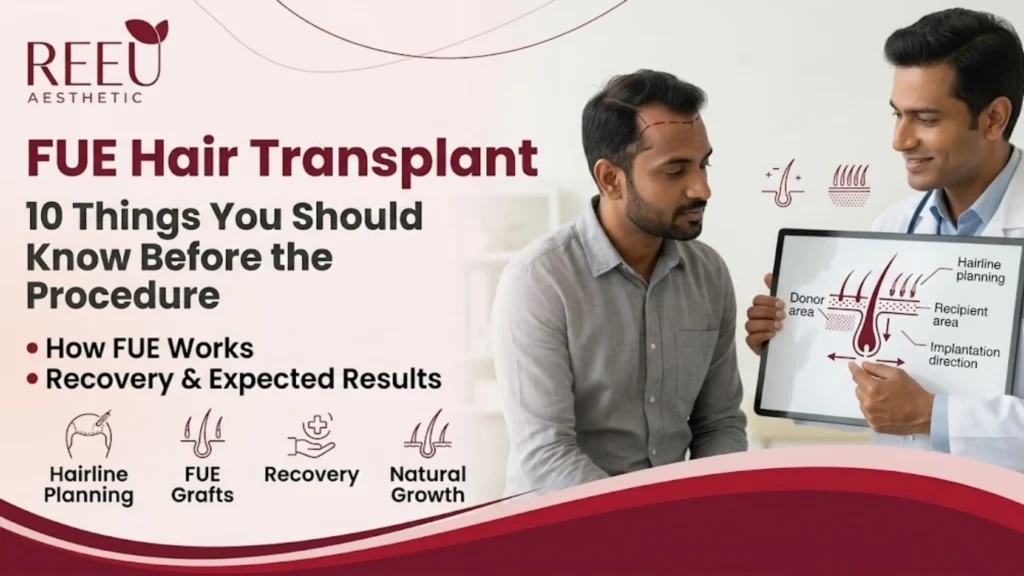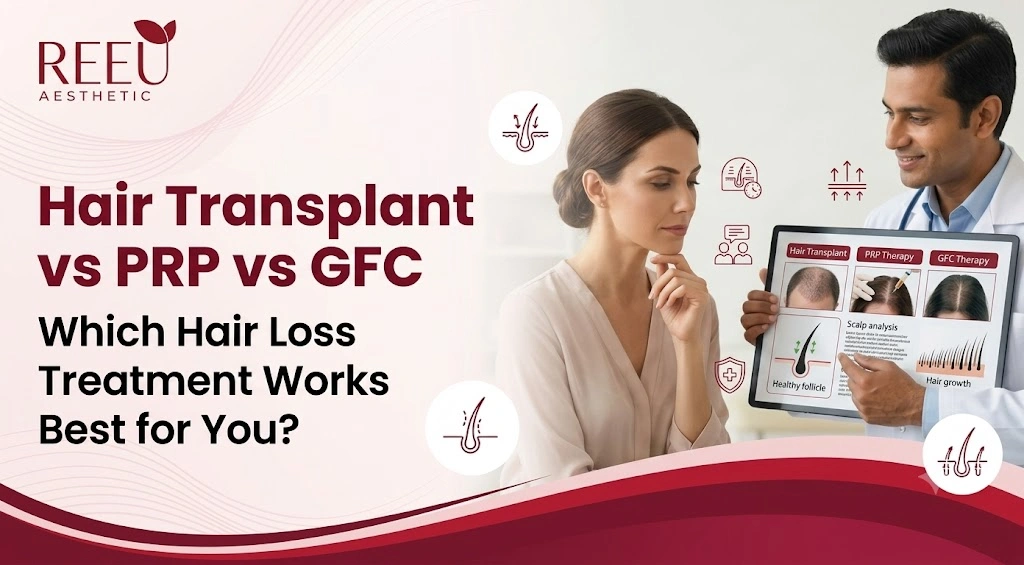



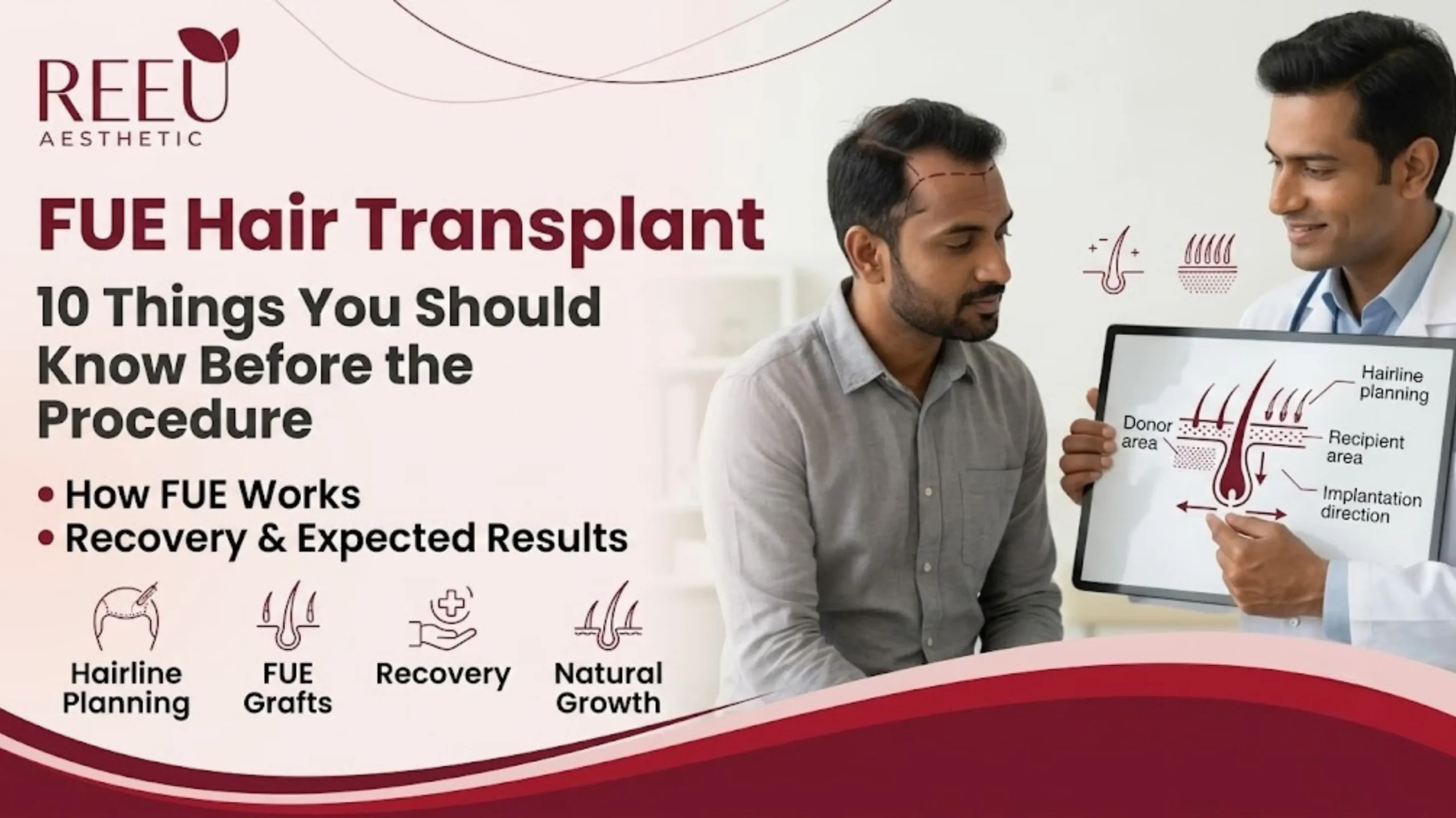
An FUE hair transplant is a hair restoration procedure in which individual follicular units are removed from a donor area and placed into areas affected by hair thinning or baldness. Before deciding on surgery, it is important to understand candidacy, donor hair, preparation, recovery, expected growth, and possible risks.
FUE can be useful for selected patients, but it is not automatically suitable for every type or stage of hair loss. A proper consultation helps determine whether transplantation is appropriate for your scalp and long-term hair-loss pattern.
1. Understand What FUE Hair Transplant Actually Does
FUE stands for Follicular Unit Extraction.
During the procedure, individual follicular units are carefully extracted from a donor area, usually where hair is more resistant to the pattern of hair loss. These grafts are then prepared and placed into recipient areas according to the planned hairline and density.
The aim is to redistribute existing healthy hair. Therefore, FUE does not create unlimited new hair follicles.
2. Not Everyone Is a Suitable Candidate
Your pattern and cause of hair loss matter before surgery.
A hair transplant may be considered when there is:
- Sufficient healthy donor hair
- A suitable area for transplantation
- A stable or appropriately assessed pattern of hair loss
- Realistic expectations about density and coverage
- General health suitable for the procedure
Diffuse thinning, active scalp conditions, certain forms of scarring alopecia, or limited donor hair may require a different approach.
A specialist should assess the scalp and donor area before recommending surgery. Candidate selection and donor-area evaluation are important areas often overlooked in generic hair-transplant content.
3. Your Donor Area Is Extremely Important
The donor area provides the follicles used for transplantation.
A surgeon evaluates factors such as:
- Donor hair density
- Hair calibre
- Follicular characteristics
- Pattern of existing hair loss
- Expected future hair loss
- Scalp condition
Using too many grafts without considering future hair loss can affect the appearance of the donor area.
For this reason, graft planning should be individualized rather than based only on a patient’s desired number of grafts.
4. The Number of Grafts Is Not the Same for Everyone
There is no standard graft number that applies to every patient.
The number required depends on factors such as:
- Size of the thinning or bald area
- Desired hairline design
- Existing hair density
- Donor availability
- Hair characteristics
- Future hair-loss risk
A natural-looking result is influenced not only by the number of grafts but also by their placement, distribution, angle, direction, and the characteristics of the patient’s own hair.
5. Preparation Before FUE Matters
Your surgical team should provide specific instructions before the procedure.
During your consultation, discuss all medications, supplements, allergies, medical conditions, smoking, alcohol use, and previous scalp procedures.
Do not stop prescribed medicines on your own.
The supplied research highlights pre-procedure questions around smoking, alcohol, medications, shaving, and other preparation issues as useful patient-education opportunities.
Follow the instructions given by your treating doctor because preparation requirements can vary depending on your health and the planned procedure.
6. FUE Is Usually Performed With Local Anesthesia
FUE is commonly performed using local anesthesia so that the treatment area is numb during the procedure.
Patients may still experience pressure, movement, or other sensations even when sharp pain is reduced.
The duration varies depending on the number of grafts and the complexity of the procedure. Larger sessions can require substantially more time than smaller procedures.
Your surgeon should explain what to expect before the procedure begins.
7. Recovery Takes Time
FUE generally involves a recovery period, even though it does not involve removing a strip of scalp as in traditional FUT surgery.
Immediately after treatment, patients may experience:
- Redness
- Small scabs around grafts
- Mild swelling
- Tenderness
- Temporary scalp sensitivity
Your surgeon will provide instructions about washing, sleeping position, physical activity, and protecting the newly transplanted grafts.
The exact timeline varies between patients, so postoperative instructions should take priority over generic online schedules.
8. Hair Growth Is Gradual
One of the most important things to understand before an FUE hair transplant is that the final result does not appear immediately.
Some transplanted hairs may shed during the early healing period. This is commonly referred to as shock loss or postoperative shedding.
New growth develops gradually afterward.
The supplied research specifically identifies shock loss, graft healing, and realistic hair-growth timelines as areas where patients need clearer information.
Because growth occurs gradually, judging the result too early can create unnecessary concern.
9. FUE Has Possible Risks and Limitations
Like any surgical procedure, FUE has potential risks.
These may include:
- Infection
- Bleeding
- Swelling
- Temporary or altered sensation
- Folliculitis
- Scarring or visible donor-area changes
- Poor graft growth
- Uneven density
- Unsatisfactory hairline design
- Continued native-hair loss
Results can also be affected by the underlying cause of hair loss, donor supply, healing, surgical technique, and future progression of hair thinning.
Therefore, FUE should not be presented as a guaranteed permanent cure for every form of hair loss. The research specifically warns against guaranteed-result claims and immediate-result promises.
10. Long-Term Hair Loss Still Needs Attention
A hair transplant redistributes follicles, but it does not necessarily stop the progression of hair loss in untreated native hair.
Depending on the diagnosis, your doctor may discuss medical treatment or other hair-restoration options alongside or after transplantation.
Long-term planning is particularly important for patients with progressive male or female pattern hair loss.
The objective is to create a treatment plan that considers both the transplanted hair and the patient’s remaining native hair.
Conclusion
An FUE hair transplant can be an option for selected patients with suitable donor hair and an appropriate pattern of hair loss. However, the procedure involves more than extracting and implanting grafts.
Understanding donor availability, graft planning, preparation, recovery, gradual hair growth, possible complications, and long-term hair-loss management can help you make a more informed decision.
If you are considering FUE in Bhubaneswar, discuss your hair-loss pattern, donor area, treatment goals, expected results, and possible alternatives with a qualified hair-restoration specialist before deciding on surgery.
Medical Disclaimer: This article is for general educational purposes only. It does not replace a medical examination, diagnosis, or individualized treatment advice. Suitability for hair transplantation should be determined by a qualified medical professional after appropriate assessment.
FAQ
1. What is FUE hair transplant?
FUE, or Follicular Unit Extraction, involves removing individual follicular units from a donor area and implanting them into areas affected by hair loss.
2. Who is a suitable candidate for FUE hair transplant?
Suitability depends on the cause and pattern of hair loss, donor-hair availability, scalp health, general health, and realistic expectations.
3. Is FUE hair transplant permanent?
Transplanted follicles can provide long-lasting growth, but existing non-transplanted hair may continue to thin depending on the underlying condition.
4. Is FUE hair transplant painful?
Local anesthesia is commonly used to reduce pain during the procedure. Some pressure or discomfort may still occur.
5. When will new hair start growing after FUE?
Growth is gradual. Early shedding can occur, and visible growth develops progressively rather than immediately.
6. Are there scars after FUE?
FUE leaves small extraction sites rather than the linear scar associated with strip harvesting, but scarring or visible donor-area changes can still occur.