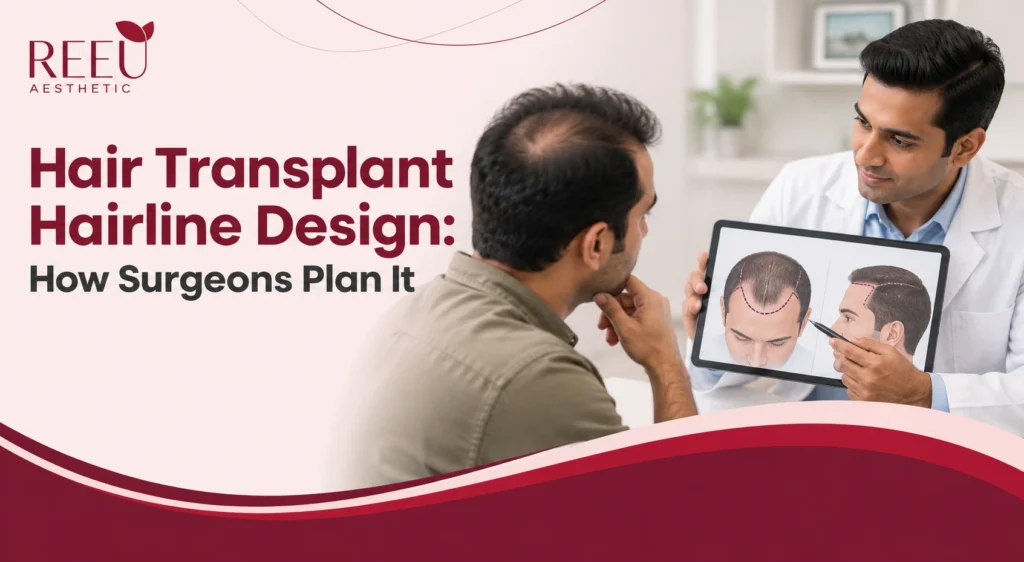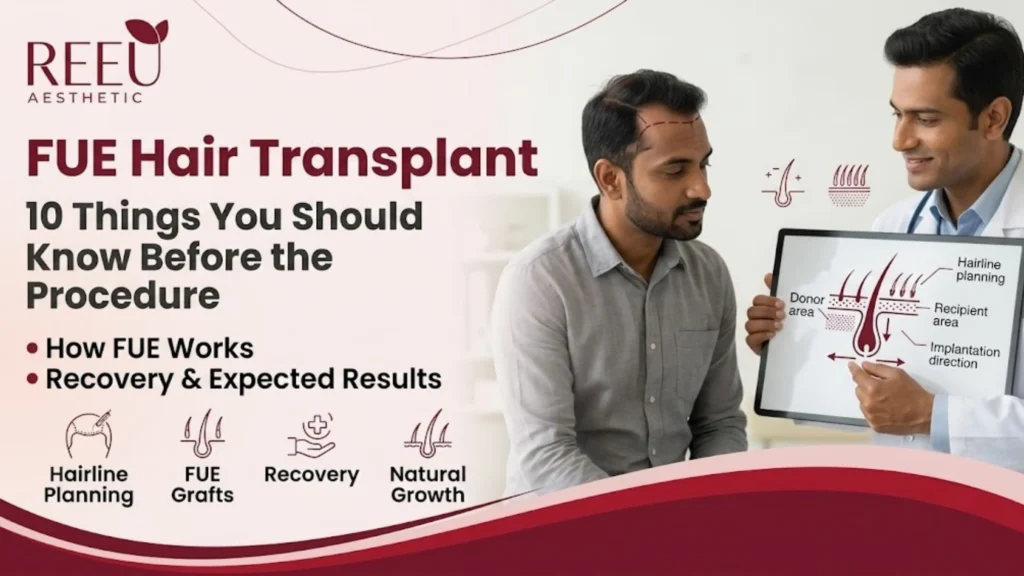




When people think about a hair transplant, they usually focus on the number of grafts. But the factor that decides whether the result looks natural is hair transplant hairline design. A well-designed hairline frames your face and ages gracefully, while a poorly designed one can look obvious from day one.
This guide explains how surgeons plan a natural-looking hairline, what you should look for in a design, and the questions to ask before you commit.
Why Hairline Design Matters More Than You Think
Your hairline is the first thing people notice when they look at your face. Even a result with excellent density can look artificial if the hairline is too low, too straight or too sharp.
Good design also protects your future. Hair loss usually progresses, so a hairline that looks right at 25 must still look right at 45. If you are new to the procedure, our page on hair transplant in Bhubaneswar explains the whole process from consultation to recovery.
What Makes a Hairline Look Natural?
A natural hairline is not a perfect line. It has several features that surgeons try to recreate:
- A soft, irregular front edge. Natural hairlines have tiny variations, not a ruler-straight border.
- Single-hair grafts at the front. Fine, single hairs create the gentle transition from skin to hair.
- Gradual density. Density increases slowly behind the front edge instead of starting thick right away.
- Correct angle and direction. Hair at the front grows forward and slightly sideways, and at the temples it points in a different direction.
- Proper temple points. The temples frame the face, and a rounded or missing temple often makes a hairline look unnatural.
How Surgeons Decide Where the Hairline Should Sit

1. Facial Proportions
Many surgeons use the facial thirds as a guide, dividing the face into upper, middle and lower sections. The hairline is placed so the forehead looks balanced with the rest of the face. A broad forehead, a narrow face or a prominent brow may all change the ideal position.
2. Age and Future Hair Loss
A teenage hairline is usually not a realistic goal for an adult. A mature, slightly higher hairline is more believable and easier to maintain over time. Placing the hairline too low in a young patient can leave an isolated patch of hair as the native hair continues to thin behind it.
3. Shape of the Hairline
Common shapes include rounded, slightly M-shaped and softly curved designs. The right one depends on your face shape, your natural pattern and how much hair you have left. For men with early recession, our blog on hair transplant for receding hairline explains when surgery makes sense.
4. Available Donor Hair
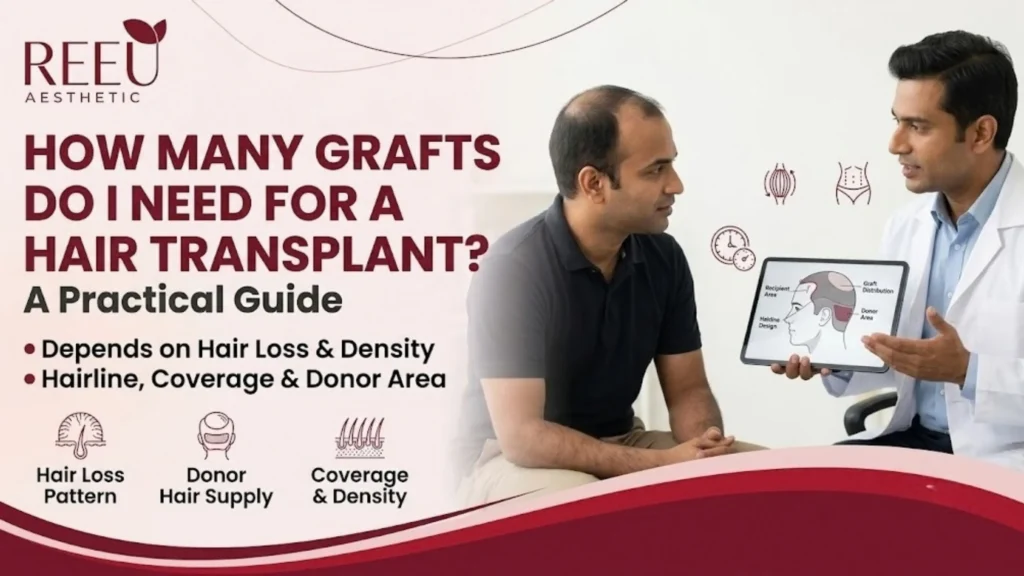
Even the best design must be supported by enough donor hair. A surgeon has to decide how to distribute a limited supply between the hairline, the mid-scalp and the crown. Our guide on how many grafts you need for a hair transplant covers donor limits and graft planning in detail.
The Role of Graft Selection and Placement
Design is not just a line drawn on the scalp. How grafts are chosen and placed matters just as much.
- Single-hair grafts go along the very front to create a soft edge.
- Two- and three-hair grafts sit behind them to build density.
- Angle and direction of each recipient site are matched to your natural hair growth.
- Spacing is planned to support blood supply to the transplanted follicles.
This level of detail takes planning and experience. You can read about the surgeon’s background on the our surgeon page.
Common Hairline Design Mistakes to Avoid
- A hairline that is too low. It may look good at first but can look odd as hair loss progresses.
- A perfectly straight line. This is one of the easiest giveaways of a transplant.
- Thick multi-hair grafts at the front. They create a “pluggy” look instead of a soft edge.
- Ignoring the temples. Without proper temple design, the face can look unbalanced.
- Using too many grafts too early. Spending your donor hair on the front can leave nothing for the crown or later sessions.
Hairline Design for Different Patients
Early recession: A conservative design that restores the temples and frontal area, often with a modest graft count.
Advanced baldness: The hairline may be kept higher so that limited donor hair can cover the frontal zone with acceptable density.
Women: Female hairlines are usually rounder and lower than male hairlines, and the planning is different, so a dedicated evaluation is important.
Non-Surgical Support Around Your Hairline
Surgery is not the only part of the plan. Supportive treatments such as PRP therapy and GFC therapy are often discussed to support existing hair, and our page on hair loss treatment in Bhubaneswar explains the wider options. Responses differ from person to person, so your doctor will advise what suits you.
If your donor hair is limited or you prefer a shaved look, scalp micropigmentation can be used to create the appearance of a defined hairline.
Questions to Ask Before You Finalise the Design
- How will you decide the position of my hairline?
- How will this hairline look as my hair loss progresses?
- Which grafts will be used at the front edge?
- How much donor hair will be kept in reserve?
- Can I review the design drawn on my scalp before the procedure?
A good surgeon will welcome these questions and explain the reasoning clearly.
Final Thoughts
Great hair transplant hairline design combines art and planning. It considers your face, age, hair type, donor supply and future hair loss, not just the number of grafts. The hairline you choose today should still look right years from now.
The best way to understand what suits you is a personal evaluation. You can book an appointment for a consultation, or send your questions through our contact page. You can also see more of our work in the gallery and read patient feedback on the testimonials page.
Disclaimer: This article is for general information and does not replace medical advice. Results vary from person to person. Please consult a qualified doctor before making any treatment decision.
Frequently Asked Questions
1. How is the hairline decided in a hair transplant?
The surgeon considers your facial proportions, age, hair loss pattern and donor hair, and then marks a design on the scalp. Most patients review it before the procedure begins.
2. Can I choose a low hairline?
A very low hairline is often not advisable, especially at a young age, because it may look unnatural as hair loss progresses. Your surgeon will guide you towards a realistic height.
3. Why are single-hair grafts used at the front?
Single hairs are finer and create a soft, natural transition between skin and hair, which helps the hairline look less obvious.
4. Will the hairline look natural immediately after surgery?
Not immediately. Redness and scabbing settle in the first couple of weeks, shedding follows, and the final look develops over about 9 to 12 months.
5. Can a poorly designed hairline be corrected?
In some cases, yes, through corrective procedures, but options depend on how much donor hair remains. This is why planning matters from the start.