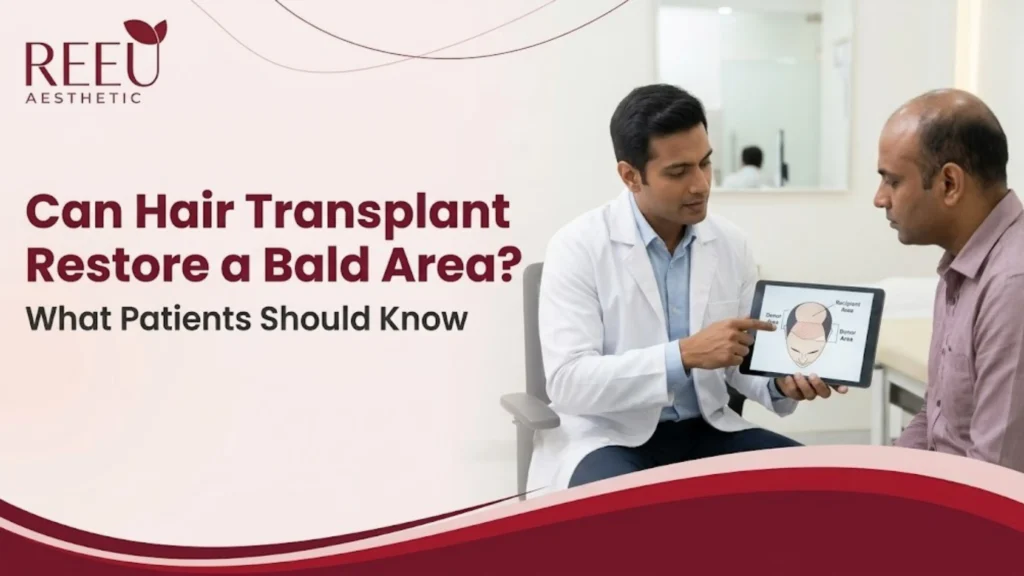




If your hair loss has progressed to a smooth, completely bald patch, you may feel that nothing can bring it back. The good news is that a hair transplant for a completely bald area can work in many cases. The honest part is that the result depends on why the area is bald, how much donor hair you have and how much coverage you expect.
This guide explains what is realistic, who is a good candidate and what to ask before you decide.
Can a Hair Transplant Really Work on a Completely Bald Area?
Yes, in the right patient. A transplant moves healthy hair follicles from the back and sides of the scalp, which are usually resistant to the hormone DHT, to the bald area. Once placed, these follicles generally keep growing in the new location.
The key condition is that the bald scalp must be healthy enough to support the new grafts. Skin with a good blood supply accepts grafts well. Skin with heavy scarring or poor circulation may not. Our page on hair transplant in Bhubaneswar explains the procedure from consultation to recovery.
Why Is the Area Bald? The Cause Matters
Before planning anything, the doctor needs to find out why the hair is gone.
- Androgenetic alopecia (pattern baldness): The most common cause and usually the best candidate for a transplant, as long as donor hair is good.
- Scarring (cicatricial) alopecia: Hair follicles are permanently destroyed. Surgery may be possible only if the condition is inactive and stable, and results can be less predictable.
- Burns, injuries or surgical scars: Transplantation may work, but scar tissue has a weaker blood supply, so coverage is often lower.
- Active alopecia areata or other inflammatory conditions: Surgery is generally not advised until the condition is controlled.
- Hair loss from medical causes or nutrition: These need treatment first, and the hair may regrow without surgery.
A proper diagnosis is the first step. Our guide to hair loss treatment in Bhubaneswar covers how different types of hair loss are evaluated.
What Results Can You Realistically Expect?
This is where expectations matter most. A transplant redistributes the hair you already have. It does not create new hair. If you have a large bald area and limited donor hair, the surgeon has to decide where the grafts will give the best visual impact.
In practice, that often means:
- Priority on the front and frontal zone, because it frames the face
- Lower density in the larger bald areas, which still looks natural when planned well
- Staged sessions if more coverage is needed and the donor area allows it
Full, teenage-level density across a very large bald area is usually not possible with one transplant. Natural, age-appropriate coverage is a realistic goal.
How Many Grafts Are Needed for a Bald Area?
A small bald patch may need a modest number of grafts, while extensive baldness can require several thousand. As a very general guide, advanced baldness may need 4,000 to 5,000 grafts or more, often spread across more than one session. Your own number depends on the area, your hair thickness and your donor supply. For a detailed breakdown, read our blog on how many grafts you need for a hair transplant.
The Biggest Limitation: Donor Hair
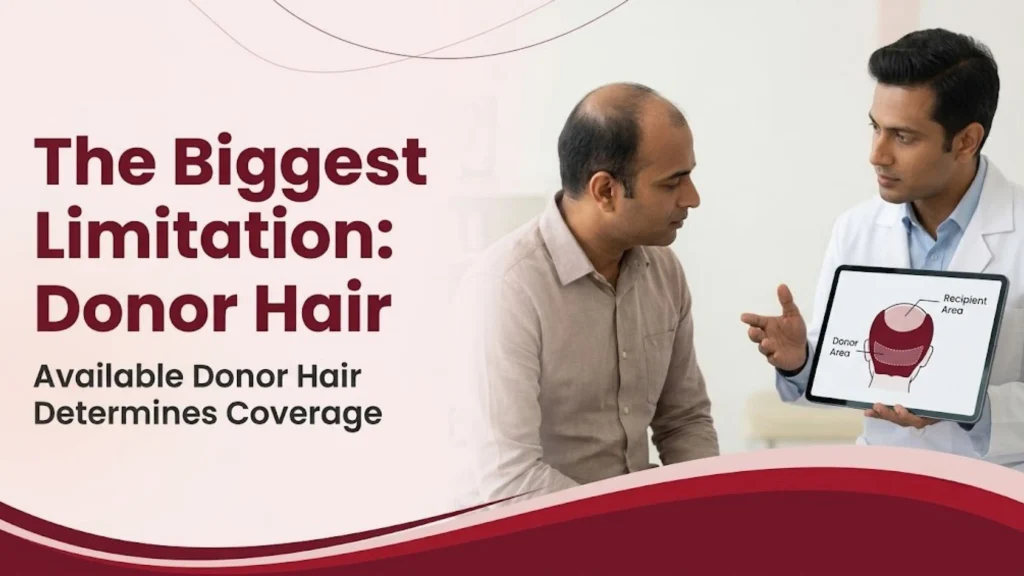
Your donor area is a limited resource. If the bald area is large and the donor area is thin, there may simply not be enough hair to cover everything at normal density. Overharvesting can leave the donor area looking patchy, which is very hard to fix.
A responsible surgeon plans for the long term, keeps a safe reserve and tells you clearly what can and cannot be achieved. Some patients with limited donor hair may be advised to cover a smaller zone well instead of spreading hair too thin.
Who Is a Good Candidate?
You may be a good candidate if:
- The cause of baldness has been diagnosed and is stable
- You have healthy, dense hair in the donor area
- Your scalp is healthy, without active infection or inflammation
- Your expectations are realistic
- You are in good general health
You may be asked to wait or consider other options if your hair loss is still progressing fast, your donor hair is very limited or an underlying condition is not controlled.
What If You Do Not Have Enough Donor Hair?
There are still options.
- Scalp micropigmentation uses pigment to create the look of shaved or closely cropped hair and can add the appearance of density where grafts are limited.
- A combined approach may use a smaller transplant for the hairline along with pigmentation for the remaining area.
- Non-surgical support such as PRP therapy and GFC therapy may help improve the quality of existing hair, though they cannot regrow hair in follicles that are already gone. Results vary from person to person.
How the Procedure Works on a Bald Area
- Consultation and scalp assessment. The doctor examines the bald area, donor density and skin quality.
- Design. The hairline and coverage zones are planned according to your face and donor supply.
- Harvesting. Follicles are collected from the donor area.
- Placement. Tiny recipient sites are created and grafts are placed at the right angle and direction.
- Recovery. Mild redness and scabbing settle within the first couple of weeks.
Good design is as important as graft count. You can read more about the planning side in our blog on hair transplant hairline design, and about the surgeon’s background on the our surgeon page.
Timeline: When Will You See Results?
- First 2 to 4 weeks: Transplanted hairs usually shed. This is a normal part of the cycle.
- Months 3 to 4: New growth begins.
- Months 6 to 9: Hair thickens and coverage improves.
- Months 12 to 18: The final result is usually visible, especially in larger areas.
Patience matters, because large bald areas take longer to show their full result.
Risks and Things to Keep in Mind
Possible risks include temporary swelling, infection, uneven growth and shock loss of existing hair. No surgeon can guarantee an exact outcome. A transplant also does not stop your native hair from thinning further, so a maintenance plan is often advised.
Final Thoughts
So, can a hair transplant restore a completely bald area? Often it can restore meaningful, natural-looking coverage, but not unlimited density. The outcome depends on the cause of baldness, the health of the scalp and the amount of donor hair available. A frank consultation will tell you what is achievable in your case.
If you want a personal assessment, you can book an appointment or send your questions through our contact page. You can also see more of our work in the gallery and read patient feedback on the testimonials page.
Disclaimer: This article is for general information and does not replace medical advice. Results vary from person to person. Please consult a qualified doctor before making any treatment decision.
Frequently Asked Questions
1. Can a hair transplant cover a fully bald head?
Usually not at full density, because donor hair is limited. Surgeons aim for natural coverage in the most visible areas, often across more than one session.
2. Is a hair transplant possible if I have been bald for many years?
Often yes, if the scalp is healthy and donor hair is good. The length of time alone is not the main factor. The cause and scalp condition are.
3. Can hair be transplanted onto scar tissue?
Sometimes, but scar tissue has a weaker blood supply, so grafts may grow less well. The doctor will assess whether the area is suitable.
4. How many sessions might I need?
Smaller areas may need one session. Larger bald areas may need two or more, depending on donor supply and your goals.
5. Is scalp micropigmentation a good alternative?
It can be a useful alternative or addition when donor hair is limited, as it creates the look of hair density without moving follicles.