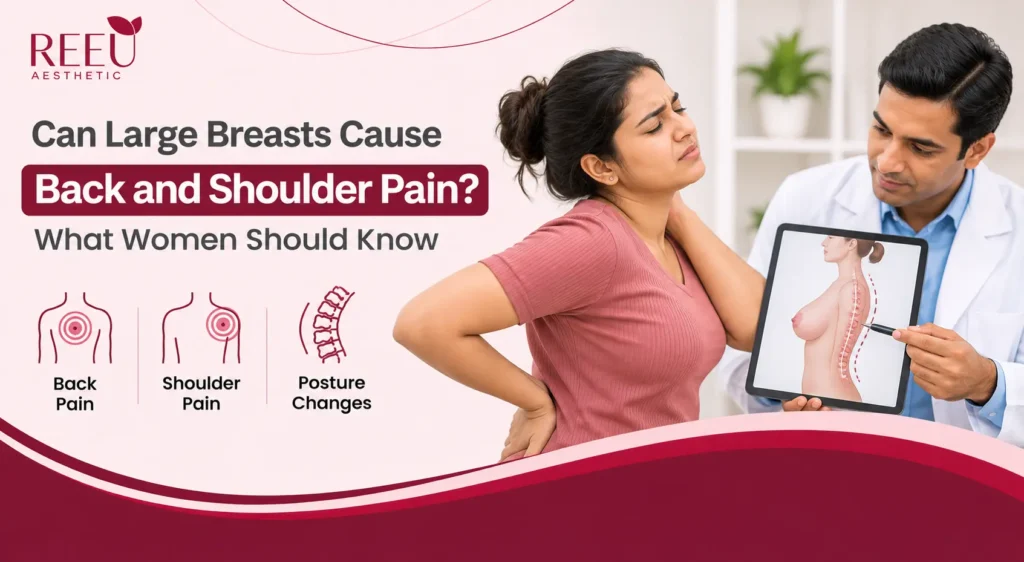



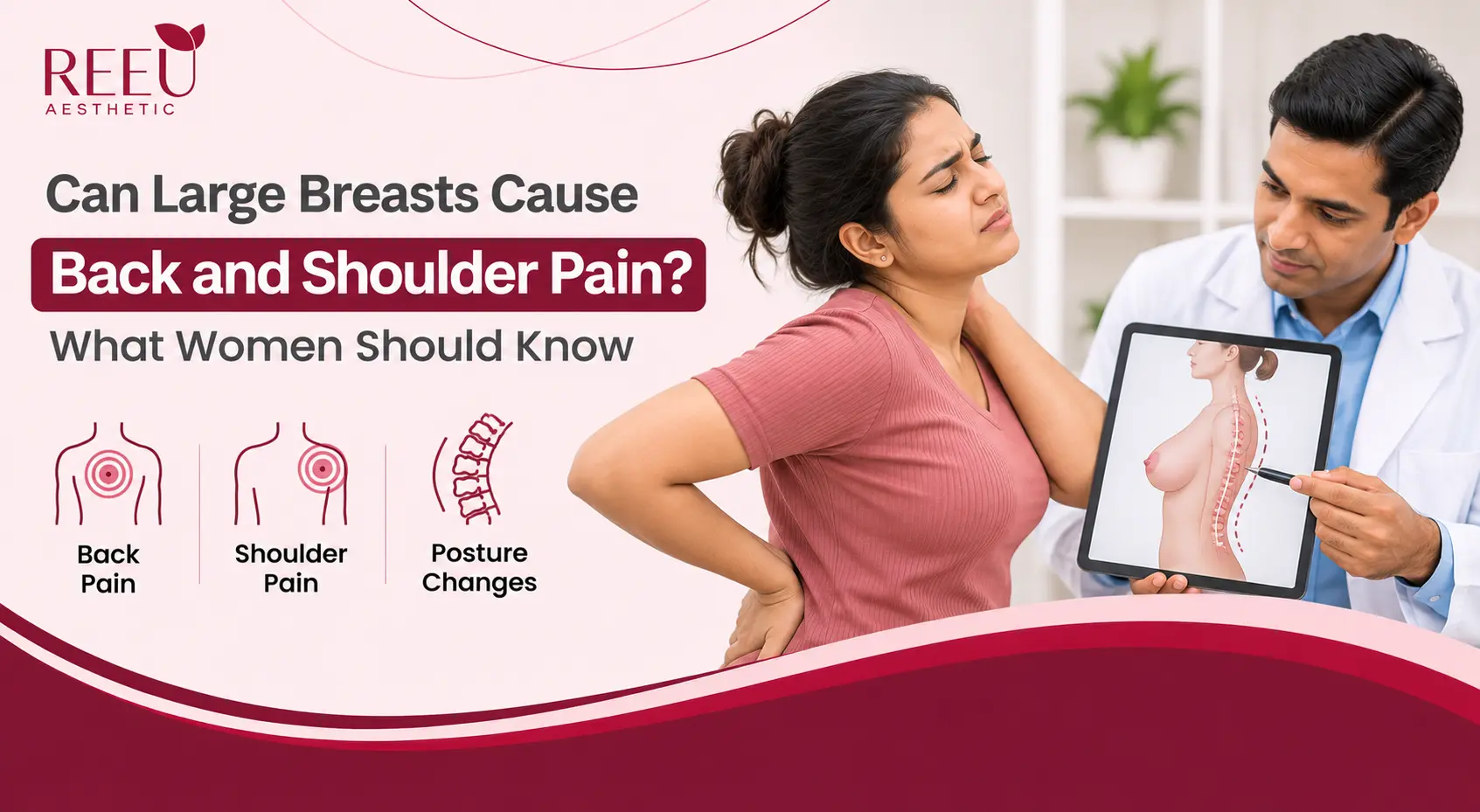
If you have large breasts and often deal with an aching neck, tight shoulders or a sore upper back, you may have wondered whether the two are connected. The short answer is that large breasts can cause back and shoulder pain in many women, though they are not the only possible reason.
This guide explains why it happens, which other signs to look for, what you can do for relief and when a surgical option may be worth discussing with a doctor.
Can Large Breasts Really Cause Back and Shoulder Pain?
Yes, they can contribute. Breast tissue has weight, and that weight sits on the front of your chest all day. Over time, the body has to work harder to keep your posture balanced, and this can strain the muscles and joints of the neck, shoulders and back.
The amount of discomfort varies a lot from woman to woman. Breast size alone does not decide it. Your posture, muscle strength, body weight, bra fit and daily activities all play a part.
Why Does the Extra Weight Cause Pain?
1. Forward Pull on the Upper Body
The weight at the front of the chest pulls the shoulders forward. To compensate, the upper back muscles stay tense for long hours, which can lead to a constant ache between the shoulder blades.
2. Posture Changes
Many women with heavy breasts unconsciously round their shoulders or slouch to feel more comfortable. Over months and years, this habit can strain the spine and neck.
3. Pressure From Bra Straps
Straps carry a large share of the breast weight. This pressure can leave deep grooves on the shoulders, cause soreness and sometimes lead to tingling in the arms or hands.
4. Muscle Fatigue and Tension Headaches
Tight neck and shoulder muscles can also trigger headaches in some women, especially after long hours of sitting or standing.
Other Signs That May Go With It
Besides back and shoulder pain, women with large breasts sometimes report:
- Deep grooves or marks from bra straps
- Neck stiffness or tension headaches
- Skin irritation or rashes under the breasts, especially in hot weather
- Discomfort or difficulty during exercise, running or sports
- Trouble finding well-fitting clothes and bras
- Numbness or tingling in the fingers
If you notice several of these together, it is worth discussing them with a doctor.
Is It Always Because of Breast Size?
No, and this is important. Back and shoulder pain is very common and can come from many causes, such as:
- Long hours of desk work or phone use
- Weak core or back muscles
- Poor sleeping position
- Spine or disc problems
- Muscle strain from lifting
- Stress and tension
This is why a proper examination matters. Your doctor will check whether the breast weight is a likely contributor or whether another cause needs attention.
When Should You See a Doctor?
Speak to a doctor if:
- The pain is persistent and does not improve with rest or simple measures
- You have numbness, tingling or weakness in your arms or hands
- The pain is severe, sudden or follows an injury
- You notice a new breast lump, nipple changes or breast pain that is unusual for you
- Pain is affecting your sleep, work or daily life
Back pain with any unusual symptoms should never be assumed to be “just because of breast size”. Get it checked first.
Non-Surgical Ways to Get Relief
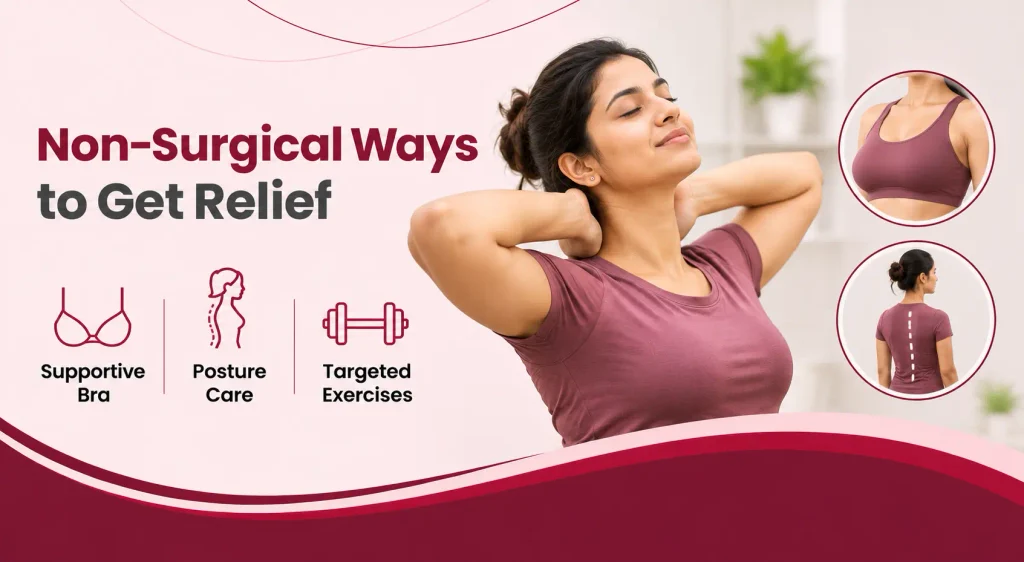
Many women get meaningful relief with simple steps before considering surgery.
- Get a proper bra fit. A well-fitted, supportive bra with wide straps and good band support can reduce strain. Many women wear the wrong size without realising it.
- Strengthen your back and core. Exercises that build the upper back, shoulders and core help your body carry the load better.
- Work on posture. Pay attention to how you sit, stand and use your phone or laptop.
- Use heat and gentle stretching. These can ease tight muscles.
- Consider physiotherapy. A physiotherapist can create a plan for your posture and muscle imbalance.
- Manage body weight if advised. If weight is a factor, your doctor may suggest a healthy plan.
Always check with your doctor before starting a new exercise programme if you already have pain.
When Does Surgery Come Into the Picture?
If pain, grooving and discomfort continue despite good bra support, exercise and physiotherapy, some women choose to discuss surgery. A breast reduction surgery removes excess breast tissue and skin and reshapes the breasts into a smaller, lighter and more comfortable size. Many women seek it for relief from physical symptoms as well as for comfort and appearance.
Surgery is a personal decision, and it is not right for everyone. Your doctor will review your symptoms, health history and goals before suggesting whether it suits you.
What Does Breast Reduction Involve?
A general overview of the process:
- Consultation. The surgeon examines you, discusses your symptoms and expectations and explains the options.
- Planning. The new breast size, shape and nipple position are planned to suit your body.
- Procedure. Excess tissue and skin are removed and the breast is reshaped, usually under general anaesthesia.
- Recovery. You are given instructions on wound care, a support garment and activity limits.
Our page on breast surgery options gives a wider overview of procedures for the breast area, and the surgeon’s background is shared on the surgeon profile page.
What About Breast Lift?
Some women with heavy or drooping breasts also ask about a lift. A breast lift raises and reshapes the breast but does not reduce its size, so it is mainly considered for sagging, not for relief from heavy breast weight. In some cases, reduction and lift techniques are combined, and your surgeon will explain what suits your anatomy.
What to Expect After Breast Reduction
Recovery differs from person to person, but in general:
- First few days: Swelling, bruising and tightness are common, and you will need rest.
- First 1 to 2 weeks: Light daily activity is usually possible as advised by your doctor.
- Weeks 4 to 6: Many women slowly return to exercise with approval.
- Several months: Swelling settles and the final shape becomes clearer.
Scars are an expected part of the procedure. Their appearance varies and improves gradually. Follow your doctor’s aftercare instructions closely.
Risks and Limitations to Know About
Like any surgery, breast reduction has possible risks, including infection, bleeding, scarring, changes in nipple sensation, asymmetry and effects on breastfeeding ability in some cases. Results vary from person to person, and no surgeon can guarantee a specific outcome or complete pain relief. It is important to have a frank discussion about these points before deciding.
Final Thoughts
So, can large breasts cause back and shoulder pain? Yes, they often can, mainly through weight, posture strain and strap pressure. But other causes are common too, so a proper evaluation comes first. Many women find relief with good support, exercise and posture care, and those who continue to struggle can discuss surgical options with an experienced surgeon.
If you want a personal assessment, you can book an appointment for a consultation, or send your questions through our contact page. You can also view more of our work in the gallery and read patient feedback on the testimonials page.
Disclaimer: This article is for general information and does not replace medical advice. Results vary from person to person. Please consult a qualified doctor before making any treatment decision.
Frequently Asked Questions
1. Can large breasts cause neck and shoulder pain?
They can contribute, because the weight pulls the shoulders forward and strains the neck and upper back muscles. Other causes should also be ruled out by a doctor.
2. Will a better bra fix my back pain?
A well-fitted supportive bra helps many women, but it may not fully solve the problem if the breast weight is significant. Posture and strength work usually help as well.
3. Does breast reduction surgery relieve back pain?
Many women report feeling more comfortable after reduction, but results vary and relief cannot be guaranteed. Your doctor will assess whether your pain is likely to be related to breast weight.
4. At what age can a woman consider breast reduction?
It is usually advised once the breasts have finished developing. The right timing depends on individual health and needs, so a doctor’s opinion is essential.
5. Will breast reduction affect breastfeeding?
It can in some cases, depending on the technique used. Discuss your future plans with the surgeon before surgery.