



You have worked hard on your diet and workouts, the number on the scale has dropped, and your arms, face and stomach look leaner. Yet the chest still looks full, puffy or rounded. This is a very common frustration, and it is often a sign of gynecomastia after weight loss rather than a lack of effort.
This guide explains why chest tissue can remain even after you lose weight, how to tell what is causing it, and what options are available.
What Is Gynecomastia?
Gynecomastia is the enlargement of male breast tissue. It happens when the glandular tissue under the nipple grows, and it can affect one or both sides. It is quite common and is not a sign that you are doing anything wrong. Our page on gynecomastia explains the condition, its causes and the available treatments in detail.
Why Does Chest Tissue Remain After Weight Loss?
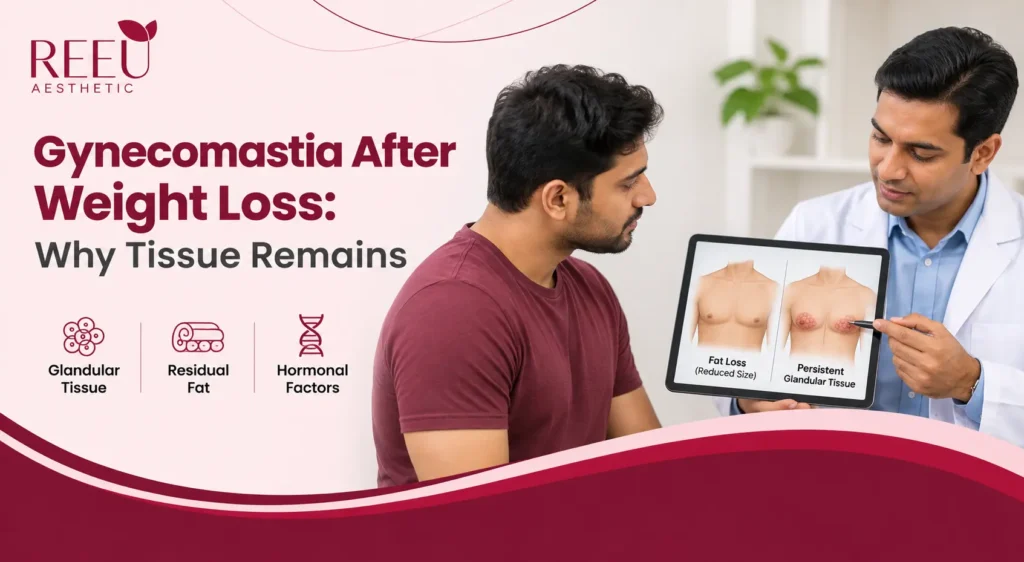
The main reason is that the chest can hold two different types of tissue, and they respond differently to weight loss.
- Fat tissue is spread across the chest and reduces when you lose overall body fat, though not always evenly.
- Glandular tissue is firm breast tissue that sits behind the nipple. It does not respond to diet or exercise in the same way, so it often stays even when you get leaner.
This means you can lose fat everywhere else and still see a firm, raised or puffy area around the nipples. In many men the chest appears more noticeable after weight loss, simply because the rest of the body has become leaner and the contrast is greater.
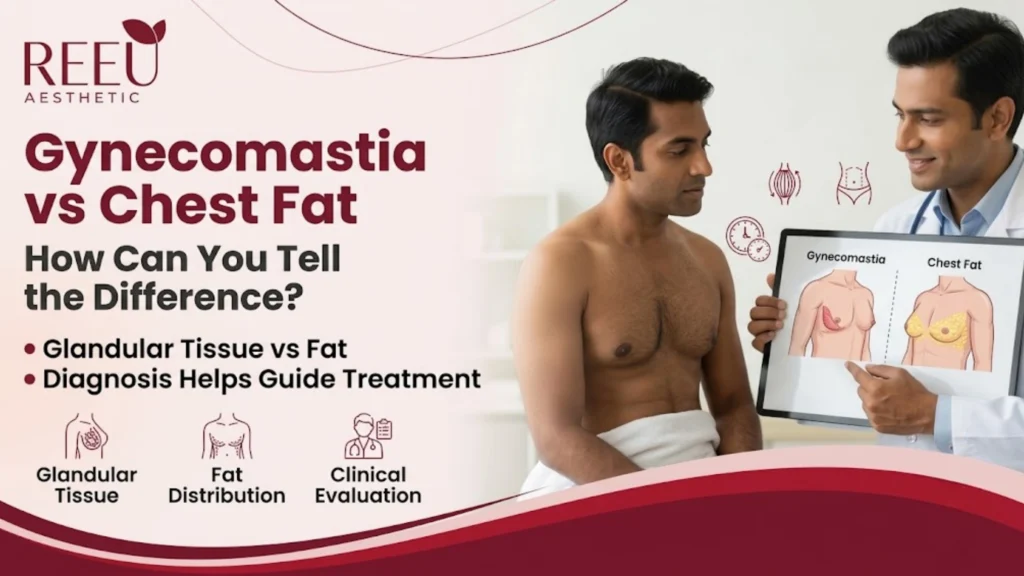
Gynecomastia vs Chest Fat: How to Tell the Difference
Doctors often separate the two conditions because the treatment differs.
- True gynecomastia usually feels like a firm or rubbery disc under or around the nipple. It may be slightly tender and often does not shrink with weight loss.
- Pseudogynecomastia (chest fat) feels soft and spread out, with no firm lump behind the nipple. It usually improves as you lose body fat.
- A mix of both is very common, which is why a physical examination matters.
A simple self-check is not a substitute for a medical opinion, so it is wise to get an assessment before deciding on any treatment.
Other Reasons Chest Fullness May Persist
1. Loose or Excess Skin
If you have lost a large amount of weight, the skin may have stretched and may not fully tighten again. This can leave a droopy or hanging look around the chest, even when the underlying tissue is small.
2. Hormonal Factors
An imbalance between male and female hormones can cause breast tissue to grow. This may be linked to puberty, ageing or certain medical conditions. A doctor may advise tests if the cause is unclear.
3. Medications and Substances
Some medicines and substances have been linked to breast tissue enlargement. If you suspect this, do not stop any prescribed medicine on your own. Discuss it with your doctor first.
4. Long-standing Gynecomastia
Tissue that has been present for a long time, especially since puberty, tends to become firmer and more fibrous. It is then less likely to settle without treatment.
When Should You See a Doctor?
It is worth getting checked if:
- The chest fullness has not reduced even after you reached a healthy weight
- You feel a firm lump behind the nipple
- There is pain or tenderness
- The enlargement is only on one side or has appeared suddenly
- You notice nipple discharge, skin changes or any unusual lump
Sudden, one-sided or hard lumps need prompt medical attention to rule out other causes.
How Is Gynecomastia Evaluated?
The doctor will usually:
- Examine the chest and check how much is glandular, fatty or skin excess
- Ask about your medical history, medicines and weight changes
- Suggest tests such as hormone levels or imaging if needed
- Explain which options suit your case
You can read about the surgeon’s background on the our surgeon page.
Treatment Options for Gynecomastia After Weight Loss

The right option depends on what is causing the fullness.
Observation and lifestyle care. If the cause is mainly chest fat or a recent change, the doctor may suggest continuing healthy habits and reviewing after some time. Exercise can build the chest muscle, but it cannot remove glandular tissue.
Surgical correction. When glandular tissue or excess skin remains, surgery is usually the most effective option. Our page on gynecomastia correction surgery in Bhubaneswar explains how the procedure removes glandular tissue and reshapes the chest.
Liposuction for the fatty component. If part of the fullness is fat, liposuction may be combined with gland removal to give a flatter, more even contour.
Skin management. If there is a significant amount of loose skin, the surgical plan may need to address it as well, and your doctor will explain what is suitable.
If fullness extends toward the underarm area, axillary breast removal may also be discussed as part of the plan.
What to Expect From Recovery
Recovery varies from person to person, but a general idea is:
- First few days: Swelling, bruising and mild discomfort are common.
- First 1 to 2 weeks: A compression garment is often advised, and you can usually return to light daily activity as your doctor allows.
- Weeks 4 to 6: Many people can slowly return to exercise with their doctor’s approval.
- Several months: Swelling settles gradually and the final contour becomes clearer.
Follow your doctor’s aftercare instructions closely for the best recovery.
Can Gynecomastia Come Back?
After the glandular tissue has been removed, it generally does not grow back in the same way. However, significant weight gain, certain medications or hormonal changes can lead to fullness again in some cases. Maintaining a stable weight and a healthy lifestyle helps protect your result. Results differ from person to person, and no surgeon can guarantee a specific outcome.
Common Myths About Gynecomastia After Weight Loss
Myth: Chest exercises will remove the tissue. Exercise builds muscle, but it cannot remove glandular tissue.
Myth: You just need to lose more weight. If the cause is glandular, more weight loss may not change the chest and can make it look more prominent.
Myth: Supplements or creams can dissolve it. There is no reliable evidence that these remove glandular tissue, so it is best to avoid them and speak to a doctor.
Final Thoughts
If you have lost weight but your chest still looks full, you are not alone and it is not a failure of effort. Gynecomastia after weight loss is usually due to glandular tissue, leftover fat or excess skin that diet and exercise cannot fully change. A proper evaluation will tell you which of these applies to you and what the best next step is.
If you would like a personal assessment, you can book an appointment for a consultation, or send your questions through our contact page. You can also view more of our work in the gallery and read patient feedback on the testimonials page.
Disclaimer: This article is for general information and does not replace medical advice. Results vary from person to person. Please consult a qualified doctor before making any treatment decision.
Frequently Asked Questions
1. Why do I still have chest fat after losing weight?
It may not be only fat. Glandular tissue behind the nipple does not shrink the way fat does, so it can remain after you get leaner.
2. Can exercise get rid of gynecomastia?
Exercise can improve chest muscle and reduce fat, but it cannot remove glandular tissue. If the tissue is glandular, a medical option is usually needed.
3. Does gynecomastia look worse after weight loss?
It can look more noticeable, because the surrounding fat reduces and the firm tissue stands out more.
4. Is gynecomastia surgery only for men who are overweight?
No. It is often done for men at a healthy weight whose chest does not change with diet and exercise.
5. Will I have visible scars after surgery?
Incisions are usually small and placed carefully, often around the edge of the areola. Scarring varies from person to person, and your doctor will explain what to expect.