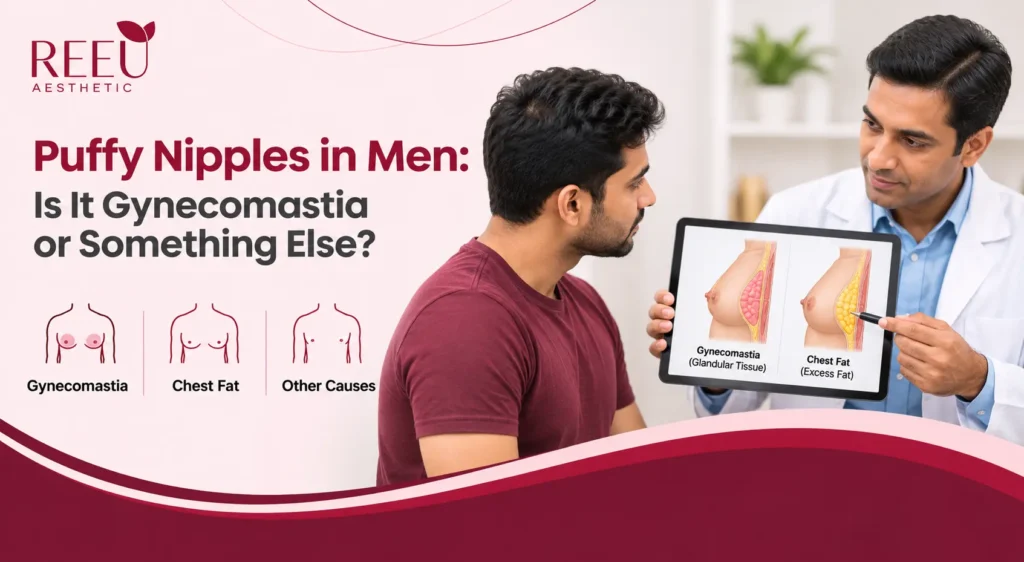




Many men notice that one or both nipples look raised, swollen or “puffy”, especially under a fitted T-shirt. It can be confusing and a little embarrassing, and the first question is usually whether these are puffy nipples in men that need treatment or just a harmless variation.
The answer depends on what is actually causing the puffiness. This guide explains the common causes, how to tell them apart, which signs need a doctor’s attention and what the treatment options are.
What Do Puffy Nipples Mean in Men?
“Puffy nipples” is not a medical diagnosis. It is a description of how the nipple and the area around it look. The puffiness can come from the nipple itself, the areola, the tissue underneath or the fat around the chest. Because several different conditions can create a similar look, a proper examination matters more than guessing from a mirror.
Common Causes of Puffy Nipples in Men
1. Gynecomastia
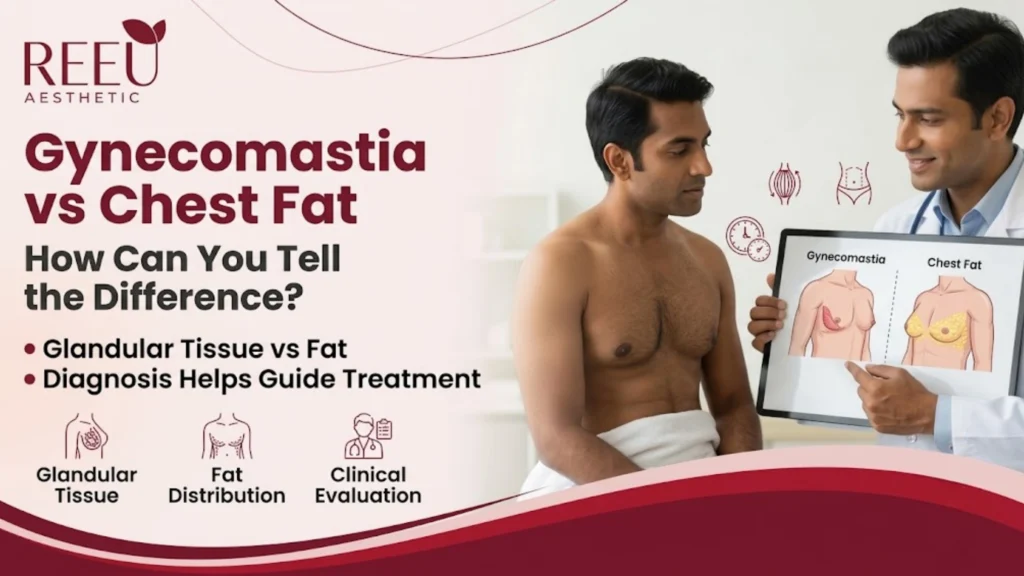
This is the most common cause. Gynecomastia is the enlargement of the glandular tissue under the nipple, and it often feels like a firm or rubbery disc. It can affect one or both sides and may be slightly tender. Our page on gynecomastia explains the condition, its causes and the available treatments in detail.
2. Pseudogynecomastia (Chest Fat)
Here the fullness comes from extra fat in the chest rather than glandular tissue. It feels soft and spread out, with no firm lump behind the nipple. It often improves as overall body fat reduces, though not always completely.
3. A Mix of Gland and Fat
Many men have both. This is why two people with similar-looking chests may need different plans.
4. Naturally Prominent Nipples or Areolas
Some men simply have larger or more protruding nipples and areolas, without any extra breast tissue underneath. This is a normal variation and is not a medical problem.
5. Hormonal Changes
Shifts in the balance between male and female hormones can cause nipple and breast tissue to swell. This can happen during puberty, with ageing or because of certain medical conditions.
6. Medicines and Substances
Some medicines and substances have been linked to breast tissue enlargement. If you suspect this, do not stop any prescribed medicine on your own. Speak to your doctor first.
7. Cold, Friction or Muscle Training
Cold temperatures, friction from clothing and intense chest workouts can make nipples look temporarily more prominent. This usually settles on its own and is not a sign of disease.
How to Tell Gynecomastia From Other Causes
A few clues can help, but they are not a substitute for a medical opinion.
- Firm, rubbery lump directly under the nipple: More likely true gynecomastia.
- Soft, even fullness with no distinct lump: More likely chest fat.
- Puffiness that changes with cold or friction: More likely a temporary, harmless response.
- Puffiness that has been there since puberty and has not changed: Could be gynecomastia or a natural variation.
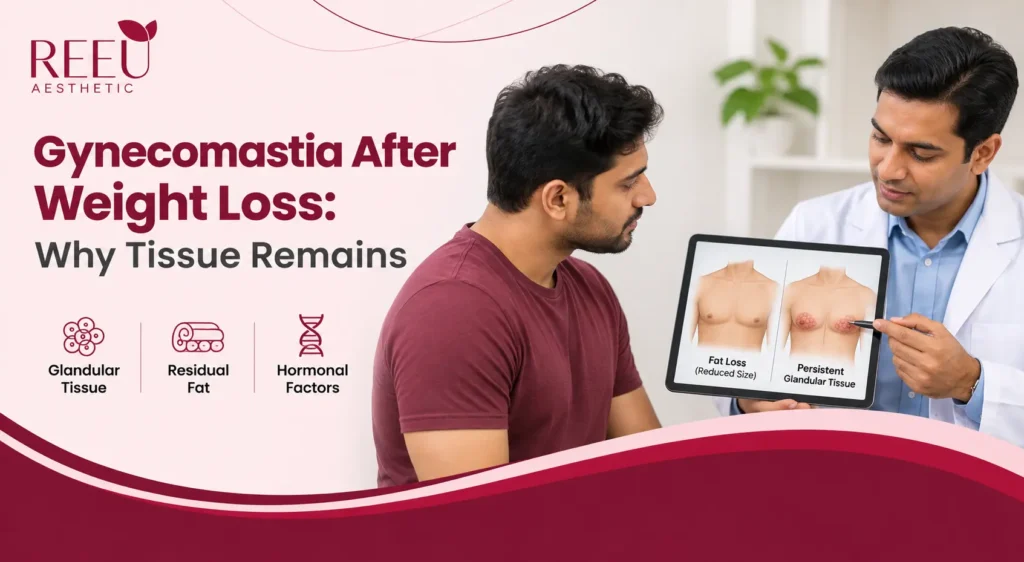
- Fullness that persists even after you lose weight: May point to glandular tissue, which is covered in our blog on gynecomastia after weight loss.
When Puffy Nipples Need Medical Attention
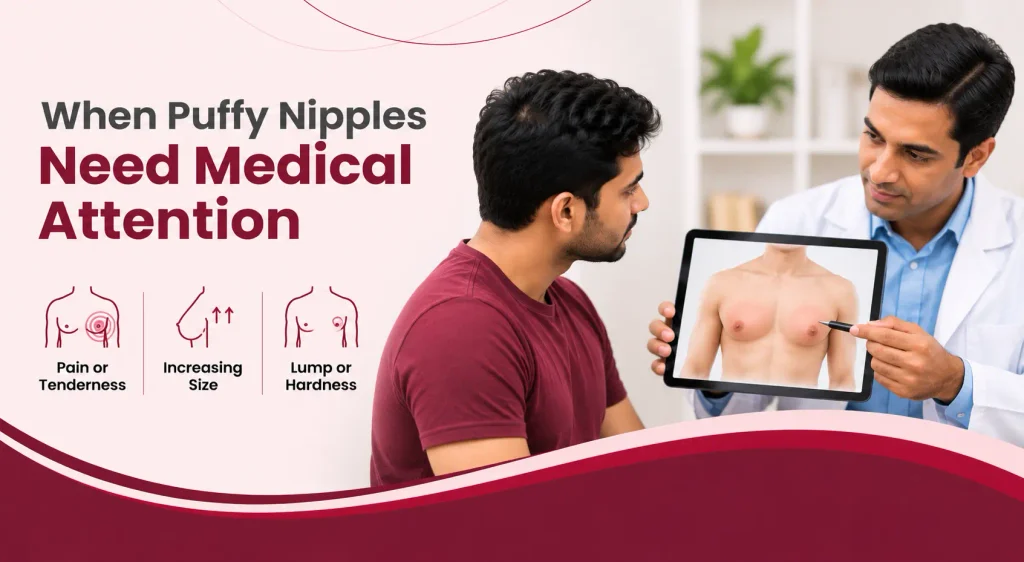
Most causes are harmless, but some signs should not be ignored. See a doctor promptly if you notice:
- A hard, fixed lump that does not move
- A lump on only one side that appeared suddenly
- Nipple discharge, especially bloody discharge
- Skin dimpling, redness or changes in the nipple’s shape or direction
- Persistent pain or tenderness
- Swelling in the underarm area
Breast cancer in men is uncommon, but it does happen, which is why any hard, one-sided or unusual lump should be checked rather than assumed to be gynecomastia.
How Doctors Evaluate Puffy Nipples
During a consultation the doctor will usually:
- Examine the chest to see whether the fullness is glandular, fatty or both
- Ask about your history, medicines, weight changes and how long it has been present
- Suggest tests such as hormone levels or imaging if needed
- Explain what is causing the puffiness and which options suit you
You can read about the surgeon’s background on the our surgeon page.
Treatment Options Based on the Cause
The right approach depends entirely on the diagnosis.
No treatment needed. If the cause is a natural variation, temporary swelling or a recent change that is settling, the doctor may simply advise observation and reassurance.
Lifestyle care. For chest fat, a healthy diet and regular exercise can help. Exercise can build the chest muscle, but it cannot remove glandular tissue.
Surgical correction. When glandular tissue is the cause and it has not settled over time, surgery is usually the most effective option. Our page on gynecomastia correction surgery in Bhubaneswar explains how the procedure removes glandular tissue and reshapes the chest.
Liposuction for the fatty part. If a portion of the fullness is fat, liposuction may be combined with gland removal for a flatter, more even contour.
Treating nearby tissue. If the fullness extends toward the underarm, axillary breast removal may also be discussed as part of the plan.
Results differ from person to person, and no surgeon can guarantee a specific outcome.
What Not to Do
- Do not rely on creams, supplements or “chest-shrinking” products. There is no reliable evidence that they remove glandular tissue.
- Do not self-diagnose from photos online. Similar-looking chests can have very different causes.
- Do not stop prescribed medicines on your own. Always speak to your doctor first.
- Do not ignore a hard or one-sided lump. Get it checked early.
Final Thoughts
Puffy nipples in men can be gynecomastia, chest fat, a natural variation or something temporary, and the only reliable way to know is a proper examination. Most cases are harmless and treatable, but a lump that is hard, painful or one-sided deserves prompt attention.
If you would like a clear answer for your own case, you can book an appointment for a consultation, or send your questions through our contact page. You can also view more of our work in the gallery and read patient feedback on the testimonials page.
Disclaimer: This article is for general information and does not replace medical advice. Results vary from person to person. Please consult a qualified doctor before making any treatment decision.
Frequently Asked Questions
1. Are puffy nipples in men always gynecomastia?
No. They can also be caused by chest fat, a natural variation in nipple or areola size, or temporary factors like cold and friction. An examination confirms the cause.
2. Can puffy nipples go away on their own?
Sometimes. Puffiness linked to puberty or a temporary cause may settle with time. Firm glandular tissue that has been present for a long time usually does not go away without treatment.
3. Does losing weight reduce puffy nipples?
It helps if the cause is chest fat. If the cause is glandular tissue, weight loss may not change it and can make it look more noticeable.
4. Is it normal to have puffy nipples on only one side?
It can be, as gynecomastia sometimes affects one side more. However, a new, hard or painful lump on one side should be checked by a doctor.
5. Can gym workouts cause puffy nipples?
Intense chest training can make the area look fuller or more prominent for a while, but it does not create glandular tissue. If the puffiness persists, get it assessed.